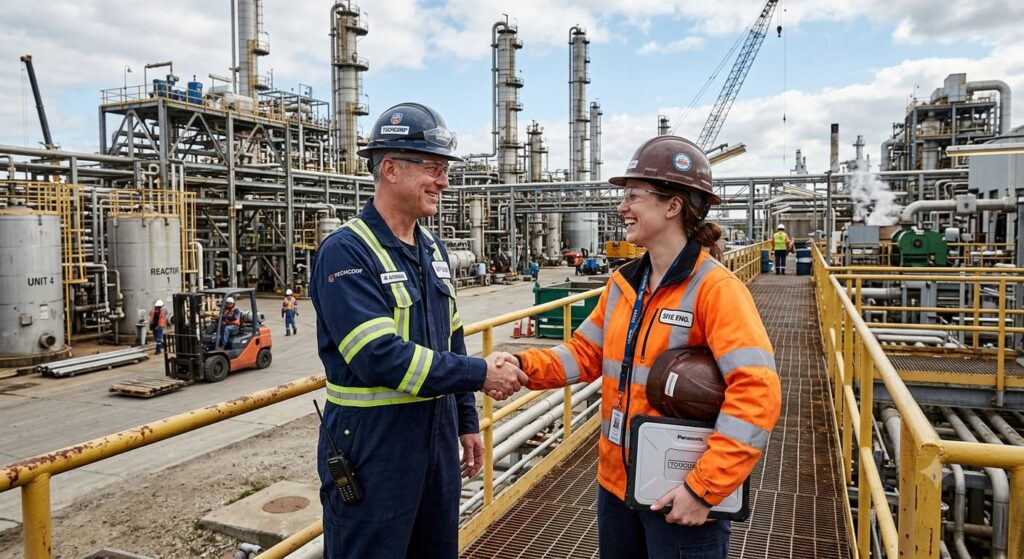
Decommissioning is often treated as the final, administrative chapter of an asset’s life, but from a process safety standpoint it can be one of the highest-risk phases a facility ever goes through. Systems that were stable in continuous operation are deliberately taken apart, hazardous inventories are drained and purged, and structures that were never designed to be dismantled must be closed out safely.
For onshore plants and offshore platforms across Malaysia, safety decommissioning is not simply switching things off. It is a structured, engineered process that carries its own hazard profile, one that demands the same rigour as commissioning a new facility, just applied in reverse and often on equipment that has degraded over decades of service.
Why Decommissioning Carries Elevated Risk
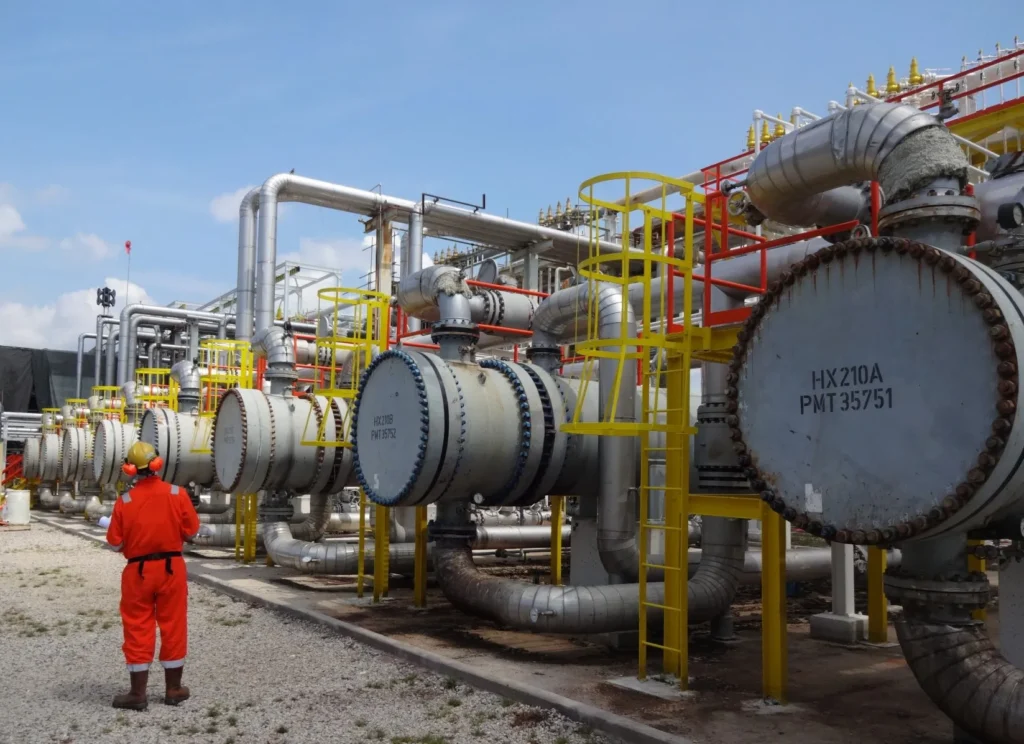
Several factors make decommissioning uniquely hazardous. Ageing equipment is the first: corrosion, fatigue, and degraded materials that were manageable under normal operating pressure and temperature may behave unpredictably once systems are depressurised or isolated for the first time in years, which is exactly the kind of degradation a disciplined risk-based inspection approach is designed to catch early. Residual hazardous materials are the second: hydrocarbons, chemicals, and other process fluids trapped in dead legs, low points, and vessels require careful draining, purging, and gas-freeing before any hot work or dismantling can safely begin.
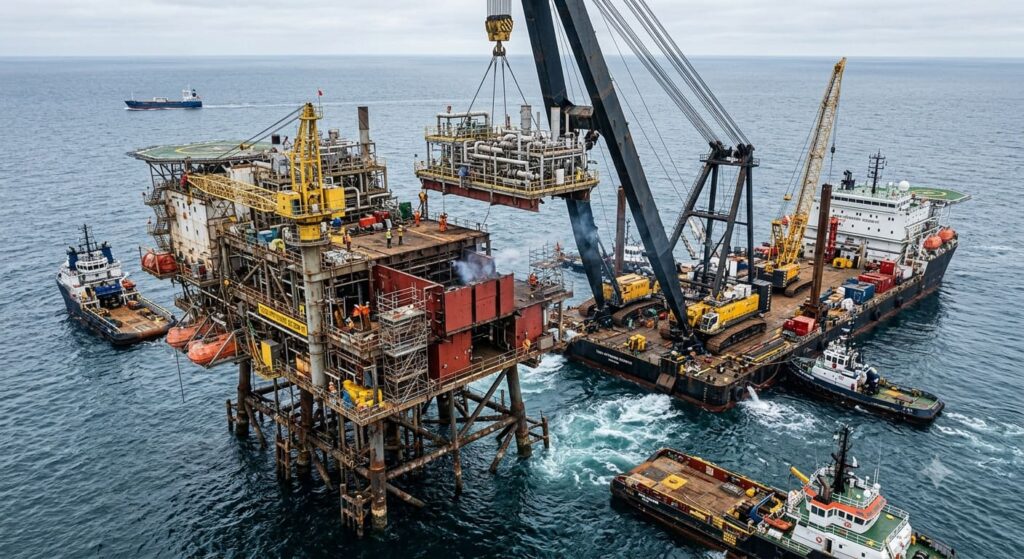
Loss of institutional knowledge compounds both problems. Original design documentation may be incomplete, outdated, or held by personnel no longer with the organisation, leaving decommissioning teams to reconstruct as-built conditions from fragments. Structural instability rounds out the list, particularly offshore, where removing topside equipment changes load paths and can compromise structural integrity assumptions that were valid throughout the asset’s operating life but no longer hold once major components are removed.
Core Steps in a Safety Decommissioning Programme
A defensible decommissioning programme follows a clear sequence. It begins with a decommissioning-specific HAZID or HAZOP, a dedicated hazard identification study focused on the dismantling sequence itself and led by an experienced HAZID consultant, distinct from the original operating HAZOP. This is followed by hazardous material inventory and disposal planning, which maps every source of residual hazard before any physical work begins on site.
Isolation and de-energisation come next, requiring verified isolation of process, electrical, and mechanical energy sources with independent confirmation before work commences, not just a single sign-off. A structural and stability assessment follows, particularly critical offshore where removing topside equipment can shift platform loading in ways the original design never anticipated. The programme closes with environmental and regulatory compliance, since closure activities must satisfy Malaysian DOSH requirements and relevant environmental authority approvals before an asset can be formally decommissioned and released.
Where Decommissioning Projects Go Wrong
The most frequent failure is underestimating the study effort required before physical dismantling starts. Teams sometimes reuse the original operating HAZOP as a stand-in for decommissioning risk assessment, but the hazard scenarios are fundamentally different, and reused studies routinely miss risks that only exist during the shutdown and dismantling sequence itself, such as unexpected residual pressure or unstable partially-dismantled structures.
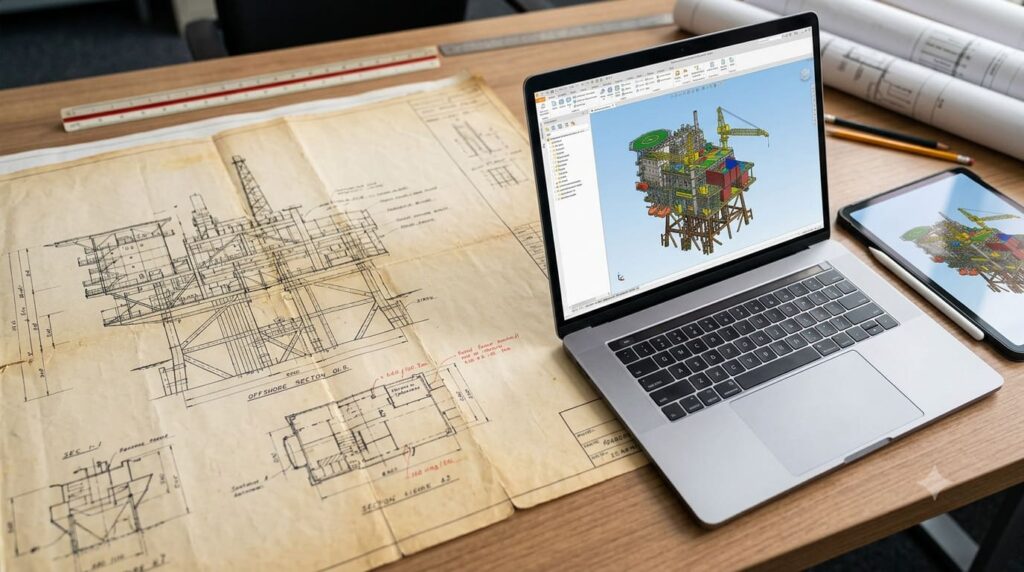
The second recurring issue is documentation gaps. Assets that have operated for twenty to thirty years frequently have incomplete as-built records, making isolation planning and residual hazard identification significantly harder, and riskier, than it should be. A third issue is scheduling pressure, where decommissioning is squeezed into a tight window driven by lease expiry or site handover deadlines, leaving little room for the independent verification that this kind of work demands.
Lessons from the Field
Decommissioning work rewards the same discipline as any other high-hazard operation: verified isolations, independent checks, and a healthy scepticism toward “as-designed” documentation that may no longer reflect reality after decades of modifications and repairs. Pure Integrity’s field engineering team has supported hazard studies and readiness reviews on ageing onshore and offshore assets across Malaysia, where closing out a facility safely depends as much on disciplined process as on technical expertise, and where the small details, an unmarked isolation point or an outdated drawing, are usually where real risk hides.
Where Pure Integrity Fits In
Pure Integrity supports asset owners with decommissioning-specific HAZID and HAZOP facilitation, isolation philosophy reviews, and closure documentation aligned to Malaysian regulatory requirements. Our field engineering team works with your project and HSE personnel to identify decommissioning-specific hazards before dismantling begins, rather than after an incident forces the issue, and to build a documented case that satisfies regulators on closure.
If you are planning the decommissioning of an onshore or offshore asset, contact us at pureintegrity.co to discuss your project scope.
References
- UK Government / OPRED, Decommissioning of Offshore Oil and Gas Installations and Pipelines — Guidance.
- IChemE, Process Safety Considerations in Plant Decommissioning, IChemE Safety Centre.
- Center for Chemical Process Safety (CCPS), Guidelines for Startup, Shutdown, and Layup of Process Plants, AIChE.
Published by Pure Integrity Sdn. Bhd. — Process Safety and Functional Safety Consultants, Malaysia.