10-Year Active Term Contract with Shell (Sabah/Sarawak) | CIDB G4.
Your team works safer and more efficiently with manuals they can actually understand.


From hazard identification and SIL determination to verification, validation, revalidation, and operational assurance.
Led by TÜV-certified Functional Safety professionals and Shell Approved LOPA Facilitators with cross-industry experience.
Aligned with IEC 61511, IEC 61508, and recognised industry best practices.
Tailored to your facility’s real risk profile, operating needs, and lifecycle requirements.
In Malaysia, Functional Safety is not governed by one specific law, but it supports compliance with OSHA 1994 and CIMAH Regulations 1996 under DOSH.
Indirect requirement for Functional Safety through employer duty of care, safe plant, safe systems of work, and safe operation of equipment and systems.
Major accident prevention requirement for facilities handling hazardous substances, including identification, prevention, and consequence reduction of major accident hazards.
IEC 61511 and IEC 61508 provide recognised requirements for designing, verifying, and maintaining Safety Instrumented Systems.
Risk assessments, SIL studies, and design work performed separately with poor integration.
Unclear requirements create gaps between safety intent and system implementation.
Fixed testing intervals without proper basis can affect efficiency or safety integrity.
Systems designed without proper verification or validated assumptions.
Lack of proof testing, bypass control, or MOC reduces safety integrity over time.
Missing documentation and unclear lifecycle evidence make compliance difficult to demonstrate.
Hazards are mitigated through reliable automated protection layers.
Alignment with international standards and industry expectations.
Safety systems perform consistently when demanded.
Safety integrity is maintained beyond project completion.
Documented, traceable, and defensible safety decisions.
Conduct hazard studies and perform SIL determination.
Develop SRS and define SIF performance criteria.
Perform SIL verification and conduct design and software assessments.
Execute FAT & SAT and perform Functional Safety Assessments.
Implement proof testing, manage bypass and changes, and conduct periodic revalidation.
Principal and Senior Consultants with cross-industry experience, TÜV-certified Functional Safety capability, and Shell Approved LOPA Facilitator experience.
Functional Safety strategies tailored to each client’s operational risk profile and asset lifecycle.
Strong alignment between hazard studies and Functional Safety implementation, supporting the transition from risk identification to risk reduction.
From hazard identification and SIL determination to verification, validation, and periodic revalidation.
Safety Integrity Level defines the reliability required for a safety function to provide sufficient risk reduction.
Yes. We provide Functional Safety awareness and technical training.
Yes. HAZOP identifies hazards, while SIL study defines the required risk reduction for safety systems.
Facilities with hazardous processes that rely on Safety Instrumented Systems or automated protection layers.
The main standards are IEC 61511 for process industries and IEC 61508 for electrical, electronic, and programmable safety systems.
Typically every 3–5 years, or when significant process, equipment, or operational changes occur.
It depends on project complexity, scope, and safety maturity, from several weeks to several months.
Reliable risk reduction, compliance, improved system integrity, lower operational risk, and sustained safety performance.
Yes. We support audits, revalidation, proof test strategies, and Management of Change reviews.
SIL studies, SRS development, SIL verification, FSA reviews, SIS design assurance, FAT/SAT support, audits, revalidation, and lifecycle support.
A structured process covering hazard identification, SIL determination, SRS development, design, verification, validation, and operational assurance.
Malaysia has no single dedicated Functional Safety law, but it supports compliance with OSHA 1994, CIMAH Regulations 1996, DOSH expectations, IEC 61511, and IEC 61508.
Process Safety identifies hazards and risks. Functional Safety ensures Safety Instrumented Systems work reliably to reduce those risks.
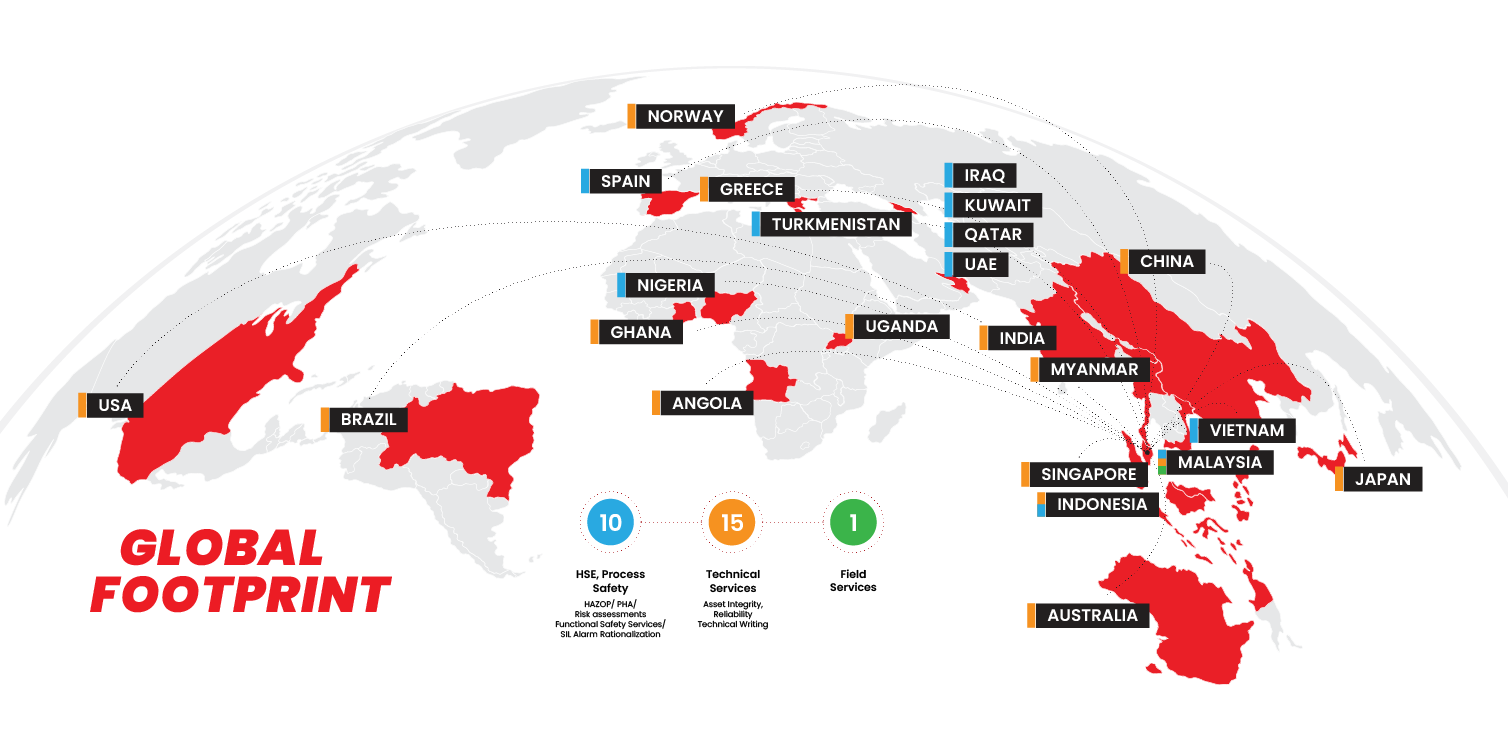
We have worked closely with many local and multi-national companies in Malaysia as well as overseas to fulfill their specific needs. Through close collaboration we have helped clients deliver safer, more reliable, and cost effective operations.
Stop Guessing. Start Verifying.
Total SIS Compliance by Pure Integrity today.
TUV Rheinland Partner | CIDB G4 Registered | HRD Corp Accredited
Quick Links
Industries
Quick Links
services
Industries