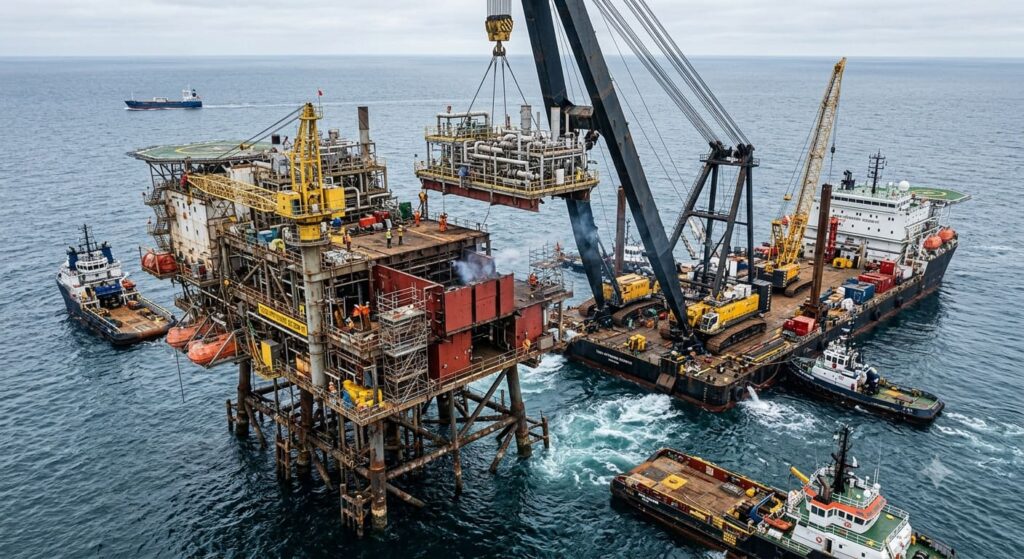

Much of the industrial infrastructure operating in Malaysia today was built in the 1970s, 1980s, and 1990s. Pipelines, pressure vessels, structural components, rotating machinery, many of these assets have outlived their original design life, often by a significant margin. Replacement is costly and operationally disruptive, so facilities continue to run aging equipment, which is entirely manageable provided the maintenance approach is up to the task.
Field maintenance is where this challenge is most acutely felt. Unlike workshop-based repairs carried out in controlled conditions, field maintenance happens on-site, in the real operating environment, often under time pressure and with constraints that change daily. Done well, it is what keeps aging infrastructure safe and productive. Done poorly or not done at all it is what allows small defects to become failures.
In sectors such as oil and gas, manufacturing, utilities, and transportation, the quality of field maintenance programmes is one of the most reliable predictors of operational reliability. In this article, I want to share what structured, effective field maintenance actually looks like — and what I have learned from years of working on it directly.
What is Field Maintenance?
Field maintenance refers to maintenance activities carried out directly at the asset location on-site, in the plant, on the platform rather than in a workshop or fabrication facility. These activities are performed by engineers and technicians working in real operational environments, and they cover a broad range of tasks: equipment inspection and condition assessment, repair of mechanical or structural components, replacement of worn parts, corrosion protection and coating repair, and calibration and performance checks.
What distinguishes field maintenance from other forms of maintenance is the context in which it happens. Field teams must adapt to different working conditions, access constraints, weather, and equipment configurations that do not always cooperate. That adaptability and the technical judgment required to make sound decisions in imperfect conditions — is what makes competent field maintenance personnel so valuable.
Challenges of Maintaining Aging Infrastructure

Aging assets present specific technical challenges that routine maintenance programmes are not always designed to address. Materials degrade in ways that were not necessarily anticipated in the original design, and degradation mechanisms that were manageable in a younger asset can become critical as the asset ages.
Common issues I encounter in older infrastructure include:
- Material corrosion in pipelines and structural components, particularly under insulation where it cannot be seen during routine visual checks
- Fatigue cracks caused by repeated operational loads, especially in systems with cyclic pressure or temperature variation
- Wear and tear in rotating equipment and mechanical components that have exceeded their recommended service life
- Outdated design standards – equipment engineered to codes that no longer reflect current safety requirements
What makes these challenges particularly difficult is that they are often invisible during normal operations. The problems develop gradually and quietly, out of sight, until something forces them into view — usually either a proactive inspection or an unplanned failure.
I experienced this directly during a major shutdown I led at a refinery in Port Dickson in 2015. Leading the Instrument Department through that turnaround, we found corrosion under insulation on instrument impulse lines that had accumulated silently over years without being detected. The equipment had been operating within its routine maintenance cycle with nothing to suggest a problem. It was only the turnaround — and the structured inspection it enabled — that brought the issue to light. That experience reinforced something I tell maintenance teams consistently: if your programme is not specifically designed to find hidden degradation, it will not find it, no matter how diligently the schedule is followed.
In Malaysia, the Department of Occupational Safety and Health (DOSH) sets the regulatory baseline for safe equipment operation and maintenance management. But regulatory compliance, as I often say to clients, is the floor — not the ceiling. Truly effective field maintenance goes well beyond the minimum.
Best Practices for Effective Field Maintenance
1. Conduct Regular Condition Assessments
Routine inspections should do more than confirm that equipment is running. They should be designed to detect early signs of degradation — and that requires using the right techniques for the degradation mechanisms each asset is susceptible to. Visual inspection, thickness measurement, vibration monitoring, and infrared thermography each detect different things. The inspection approach must be matched to the risk profile of the asset, not applied uniformly.
Condition-based maintenance — where maintenance actions are triggered by actual asset condition rather than elapsed time — is a direct output of rigorous condition assessment. It allows engineers to intervene before equipment reaches a critical failure stage, rather than reacting after the fact.
2. Prioritise Critical Assets
Not all assets carry the same operational risk, and field maintenance resources should reflect that reality. Critical equipment that supports essential processes, or whose failure would carry serious safety or environmental consequences, warrants more frequent and more thorough maintenance attention.
Many organisations use risk-based frameworks — including RBI methodologies — to determine which assets require priority maintenance. This is not guesswork. It is structured engineering analysis that produces defensible, auditable decisions about where effort should go.
3. Implement Preventive Maintenance Programs
Preventive maintenance — servicing equipment before problems occur — remains an important tool, particularly for aging infrastructure where small defects can escalate quickly. Lubrication, calibration, component replacement at defined life limits, and protective coating maintenance all help extend equipment life and improve reliability.
The key is that preventive maintenance tasks should be designed around what the asset actually needs, not inherited from generic schedules that may no longer reflect current operating conditions.
4. Use Data and Maintenance Records
One of the most consistent problems I see in older facilities is fragmented maintenance records — paper logs, disconnected spreadsheets, or records that simply do not exist because data was never captured systematically. This creates a significant problem: without historical data, you cannot trend degradation rates, identify recurring issues, or make informed decisions about inspection intervals.
Accurate, accessible maintenance records are the foundation of a learning maintenance programme. When you can see how an asset has behaved over time — where corrosion rates have accelerated, where vibration signatures have changed, where the same repair keeps recurring — you can act on that knowledge rather than starting from scratch each cycle.
5. Ensure Skilled Field Personnel
Field maintenance requires more than mechanical competence. It requires engineers and technicians who understand equipment systems, degradation mechanisms, and safety procedures — and who have the judgment to diagnose problems correctly and make sound decisions under field conditions. This is particularly important for aging infrastructure, where the equipment may behave differently from what textbooks describe.
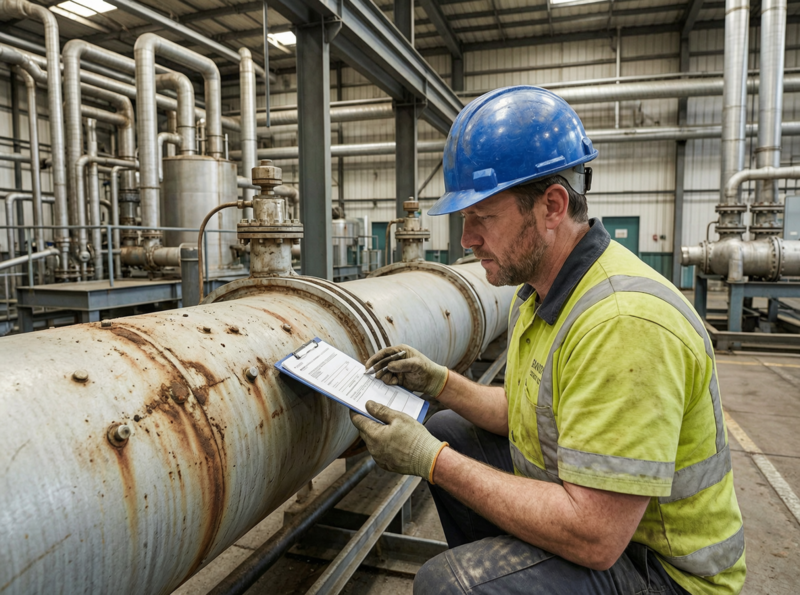
I have always believed in investing in field personnel. The best maintenance programmes I have worked with are not defined by their paperwork — they are defined by the quality and experience of the people carrying them out. Regular training, mentorship, and exposure to different asset types and failure modes are what build that competence over time.
Role of Field Maintenance in Asset Integrity
Field maintenance does not sit in isolation from asset integrity management — it is one of its most important operational expressions. The inspections, repairs, and condition assessments that field teams carry out are what give an asset integrity programme its ground truth. Without that field input, integrity management becomes a desktop exercise disconnected from what is actually happening in the plant.
Engineering guidelines, including those from the American Petroleum Institute, consistently emphasise the importance of integrating field maintenance activities with broader asset integrity and reliability programmes. The two reinforce each other: integrity management sets the risk-based framework, and field maintenance executes against it.
In my experience working across offshore platforms, FPSOs, onshore processing facilities, and industrial plants in Malaysia, the facilities that manage aging infrastructure most effectively are invariably those where the field team and the integrity team operate as one coherent system — sharing data, communicating findings, and continuously refining the maintenance approach based on what they learn.
Benefits of Strong Field Maintenance Programs
The returns from a well-structured field maintenance programme are tangible and measurable:
- Extended lifespan of aging infrastructure — assets can operate reliably beyond original design life when degradation is identified and managed proactively
- Reduced unplanned equipment downtime — failures that would otherwise occur without warning are detected and addressed before they become operational events
- Improved workplace safety — equipment in good condition is predictable equipment; degraded equipment is unpredictable
- Lower long-term repair and replacement costs — early intervention is almost always less expensive than emergency repair
- Better operational reliability — consistent performance from assets that are properly maintained and understood
Conclusion
As Malaysia’s industrial infrastructure continues to age, the pressure on field maintenance programmes will only increase. The question facing most facility operators is not whether their assets will degrade — they will. The question is whether the maintenance programme is genuinely designed to find and manage that degradation before it becomes a problem.
That requires structured inspections calibrated to actual degradation mechanisms, maintenance strategies driven by risk rather than routine, accurate data that is trended over time, and capable people in the field who know what they are looking for and why it matters.
A proactive approach to field maintenance does not just protect equipment. It protects the people who work around it, the communities nearby, and the long-term viability of the facility itself. In my experience, that is always worth the investment.
References:
1. DOSH Malaysia, Occupational Safety and Health Act 1994 (Act 514) — Reprint Version, 01-06-2024. Access: https://dosh.gov.my/wp-content/uploads/2025/01/Occupational-Safety-and-Health-Act-1994-Act-514_Reprint-Version-1.6.2024_English.pdf
2. Energy Institute, Guidance on the Management and Maintenance of the Integrity of Structures, (tarikh tidak dinyatakan awam). Access: https://www.energyinst.org/technical/publications/topics/asset-integrity/guidance-on-the-management-and-maintenance-of-the-integrity-of-structures
3. Energy Institute, Guidelines for In-Service Management of Passive Fire Protection Coating Systems, (tarikh tidak dinyatakan awam). Access: https://www.energyinst.org/technical/publications/topics/asset-integrity/guidelines-for-in-service-management-of-passive-fire-protection-coating-systems
4. ISO (International Organization for Standardization), ISO 55001:2024 — Asset Management: Asset Management System — Requirements, 2024. Access: https://www.iso.org/standard/83054.html
5. ASME Digital Collection — Journal of Pressure Vessel Technology, Journal of Pressure Vessel Technology — Inspection, Operation and Maintenance of Pressure Equipment, (ongoing publication). Access: https://asmedigitalcollection.asme.org/pressurevesseltech
This article has been reviewed and validated by:
He is a TUV Certified Functional Safety Engineer who graduated from the University of Southampton and serves as Operation Director at Pure Integrity.