
Not every piece of equipment on a plant deserves the same maintenance attention. A critical compressor that could shut down an entire process line carries a very different risk profile from a non-critical instrument with a redundant backup, yet many maintenance programmes still apply the same fixed-interval strategy to both regardless of the consequences of failure. Reliability Centered Maintenance (RCM) exists to correct that imbalance.
For asset-intensive facilities in Malaysia’s oil and gas, petrochemical, and manufacturing sectors, RCM offers a way to direct limited maintenance resources toward the equipment and failure modes that actually matter, rather than spreading effort evenly across an asset register regardless of how much each item’s failure would actually cost.
What Reliability Centered Maintenance (RCM Maintenance) Actually Is
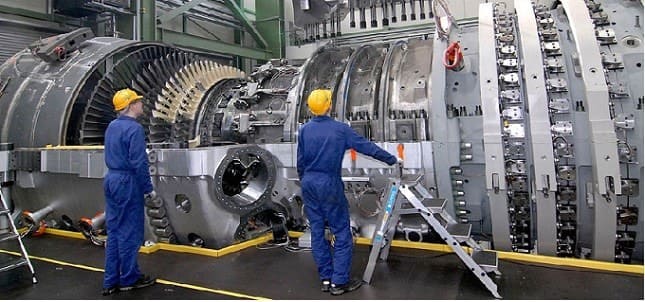
RCM is a structured methodology for determining the most appropriate maintenance strategy for each piece of equipment, based on how it can fail and the consequences of that failure, a distinction worth understanding when comparing reliability centered maintenance against traditional preventive maintenance. Rather than defaulting to time-based preventive maintenance for everything, RCM asks a specific sequence of questions for each asset: what are its functions, how can it fail to perform those functions, what causes each failure mode, what are the consequences, and finally what is the most effective way to manage that failure.
The output is a maintenance strategy tailored to actual failure behaviour. Some equipment is best served by condition-based monitoring that tracks degradation in real time, some by scheduled overhaul at fixed intervals, some by run-to-failure where the consequence of failure is genuinely minor, and some requires redesign entirely because no maintenance strategy can adequately manage the risk it presents.
Why Fixed-Interval Maintenance Falls Short

Traditional preventive maintenance assumes that failure probability increases predictably with age or usage, an assumption that holds true for only a fraction of industrial equipment. For much of a typical plant’s asset base, failures are random rather than age-related, meaning fixed-interval replacement either wastes good remaining life on components that didn’t need replacing or fails to catch the failure mode it was actually meant to prevent in the first place.
This mismatch carries two distinct costs. There is unnecessary maintenance spend on equipment that did not need intervention, tying up labour and budget that could be directed elsewhere. There are also unexpected failures on equipment whose actual failure pattern was never properly understood, because the maintenance interval was set by convention rather than by evidence.
How an RCM Programme Is Built
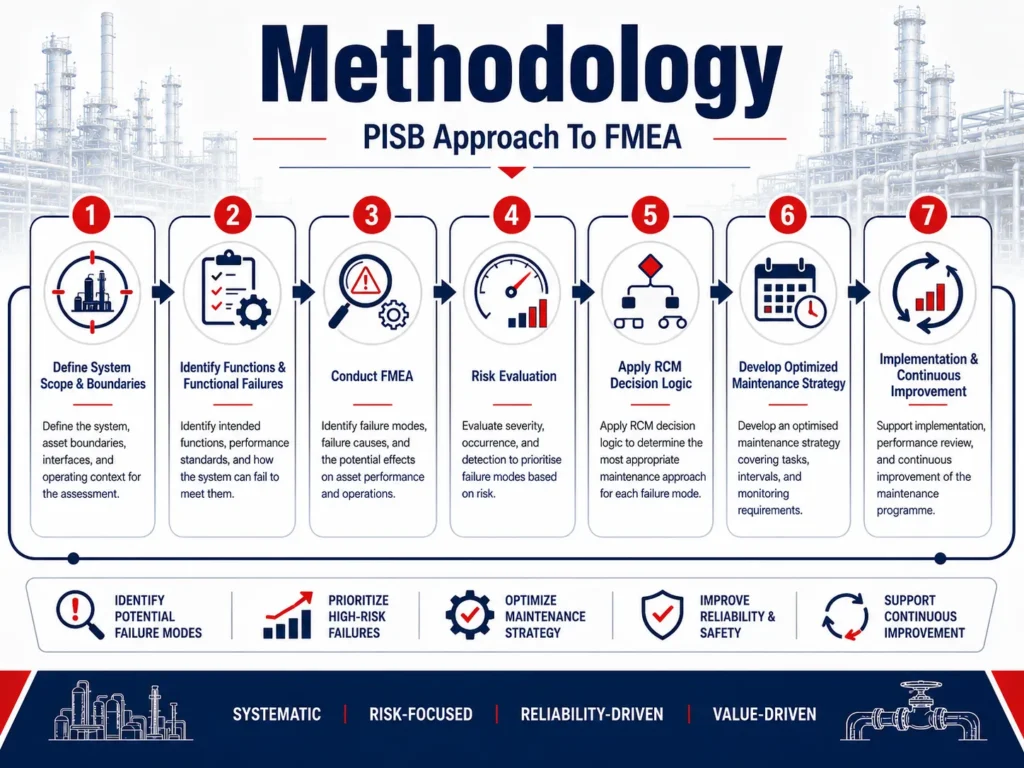
Building an RCM programme starts with asset criticality ranking, prioritising RCM effort on equipment where failure has the greatest safety, environmental, or production consequence, since not every asset justifies the same level of analytical rigour. Failure Mode and Effects Analysis, or FMEA, follows, systematically identifying how each critical component can fail and what triggers each failure mode.
Consequence evaluation comes next, classifying failures by safety, operational, and economic impact so that maintenance decisions reflect what actually matters to the business and to worker safety. Maintenance task selection then matches each failure mode to the most technically and economically justified strategy, whether that is condition monitoring, scheduled replacement, or accepting run-to-failure. The programme closes with a living review, since RCM outputs are revisited as failure data accumulates and operating conditions change over the asset’s life.
Where Experience Matters
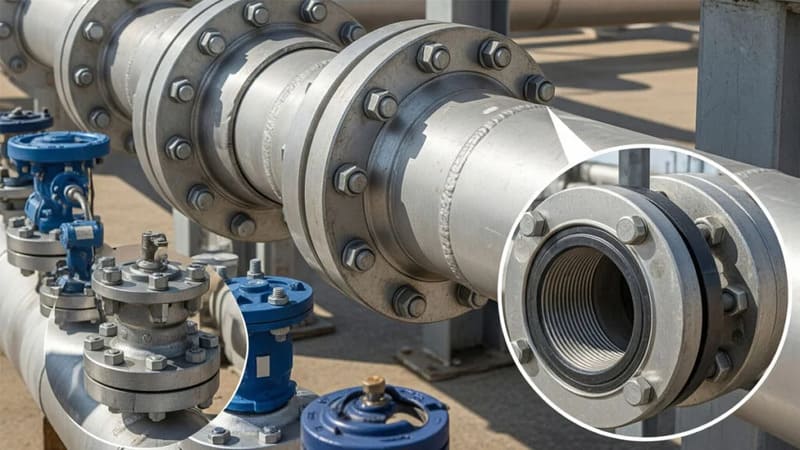
RCM is only as good as the failure data and engineering judgement behind it. Facilities that rush the FMEA stage, or apply generic failure mode assumptions instead of asset-specific analysis, end up with a maintenance strategy that looks structured on paper but does not actually reduce unplanned downtime in practice. Pure Integrity’s technical service team has supported RCM and FMEA studies across critical rotating and static equipment for clients in Malaysia, grounding each strategy in the actual failure behaviour of the asset rather than defaulting to industry-standard assumptions that may not fit the specific operating context.
Turning Readiness Into Practice

Pure Integrity facilitates RCM and FMEA studies to help asset owners direct maintenance resources where they deliver the greatest reduction in risk and downtime. Our technical service consultants work with your maintenance and reliability teams to build strategies grounded in actual asset criticality and failure behaviour, not generic industry templates.
If you are looking to optimise your maintenance strategy through RCM, contact us at pureintegrity.co to discuss your asset base.
References
- SAE International, JA1011 — Evaluation Criteria for Reliability-Centered Maintenance (RCM) Processes.
- Moubray, J., Reliability-Centered Maintenance, Industrial Press.
- IChemE, Asset Integrity and Reliability in Process Industries, IChemE Safety Centre.
Published by Pure Integrity Sdn. Bhd. — Process Safety and Functional Safety Consultants, Malaysia.
Image credit: https://torqlite.com
