In high-hazard industries, eliminating every risk is neither feasible nor expected. What is expected, and legally required in most regulatory frameworks is that risks are reduced to a level that is As Low As Reasonably Practicable (ALARP).
ALARP Assessment is the structured process by which organisations demonstrate that they have done everything reasonably possible to reduce risk, short of measures whose costs are grossly disproportionate to the benefits gained.
What Is ALARP?
ALARP is a risk management principle that sits at the intersection of engineering judgment, regulatory compliance, and ethical responsibility.
It establishes that while zero risk is an unattainable standard, organisations must actively and demonstrably reduce risk to its lowest practicable level.
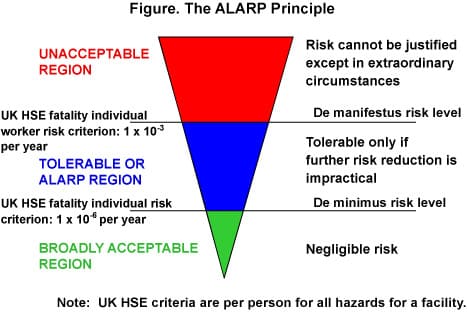
The ALARP concept is typically represented as a three-tier risk triangle:
- Intolerable region – Risk is unacceptable regardless of benefit; it must be eliminated or reduced before operations can proceed.
- ALARP region – Risk is tolerable only if it has been reduced as far as reasonably practicable; a cost-benefit justification is required for any residual risk.
- Broadly acceptable region – Risk is sufficiently low that further reduction is not required, though it should still be managed.
The practical challenge for most organisations lies in the ALARP region, where the question is not whether risk exists, but whether enough has been done to address it.
ALARP Assessment in Practice
A formal ALARP Assessment requires more than a declaration that risks have been considered. It demands a structured, documented analysis that answers three key questions:
- What are the risks?
- What controls are in place?
- Have all reasonably practicable risk reduction measures been implemented?
The assessment typically involves three stages:
1. Risk Identification and Quantification
Hazard identification tools such as HAZID studies and HAZOP reviews form the foundation of ALARP assessment.
Risks must be quantified, either qualitatively through risk matrices or quantitatively using tools such as Layer of Protection Analysis (LOPA) and fault tree analysis, before any judgment about their tolerability can be made.
2. Control Identification and Evaluation
Each identified risk must be matched against the controls currently in place. This includes engineered safeguards, administrative procedures, and safety instrumented functions.
The assessment examines whether existing controls are adequate, whether additional measures are feasible, and whether any proposed improvements would reduce risk by a proportionate amount relative to their cost.
3. Cost-Benefit Analysis (CBA)
Where residual risk remains in the ALARP region after existing controls are accounted for, a formal cost-benefit analysis may be required.
The UK Health and Safety Executive (HSE) provides widely adopted guidance on CBA for ALARP decisions, which many Malaysian operators reference alongside DOSH requirements under the Occupational Safety and Health Act 1994.
ALARP and the Hierarchy of Controls
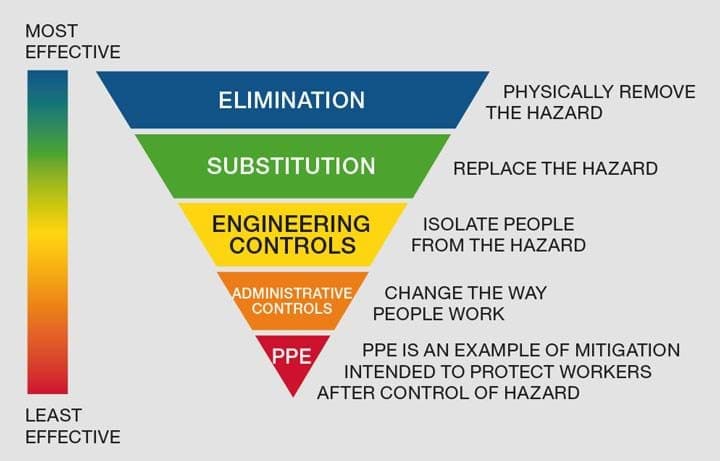
A well-structured ALARP Assessment does not treat all risk reduction measures as equal. The preferred hierarchy follows the principle of inherent safety first: eliminate the hazard at source before applying engineered controls, and apply engineered controls before relying on procedural or administrative measures.
This hierarchy is directly relevant to Asset Integrity Management ensuring that equipment performs its intended function throughout its operational life is itself a fundamental ALARP control. Degraded assets generate elevated risk; maintaining integrity reduces it.
Where Safety Instrumented Systems (SIS) are deployed as part of the ALARP control strategy, their adequacy must be verified through SIL assessment in accordance with IEC 61511.
“An SIS that does not meet its required Safety Integrity Level does not constitute a demonstrated ALARP measure.”
The Human Element in ALARP
ALARP is not a one-time assessment. It is a commitment that must be revisited whenever conditions change – when plant configurations are modified, when new hazards are identified, or when operational experience reveals gaps in existing controls.
Ir. Fasyan Sabri, P.Eng, ACPE, TUV FSE, Head of Technical Services at Pure Integrity, has seen this first-hand.
During the major turnaround at a Port Dickson refinery in 2015, the pressure to restore operations quickly created conditions where ALARP judgments had to be made in real time, balancing residual risk against operational necessity, with limited time to conduct formal analysis.
The experience reinforced a core principle: ALARP decisions made under pressure are only defensible when the groundwork has been laid beforehand, through rigorous hazard analysis, well-maintained controls, and a workforce that understands why each barrier exists.
As Fasyan puts it: “Stay hungry to learn, remain humble in receiving lessons from those with experience.”
How Pure Integrity Can Help
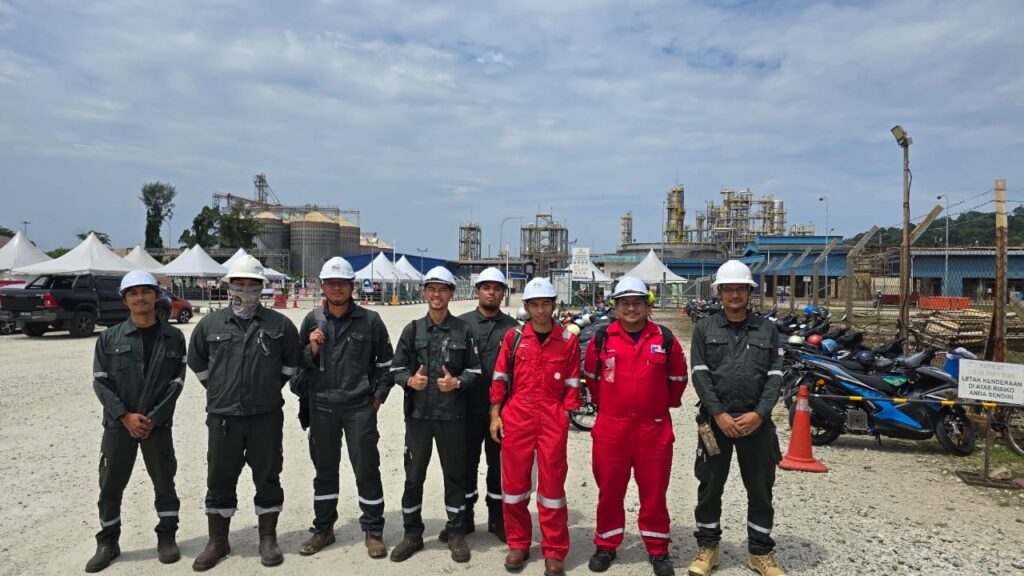
At Pure Integrity Sdn. Bhd., we support organisations in conducting formal ALARP Assessments as part of their broader Process Safety Management (PSM) programmes.
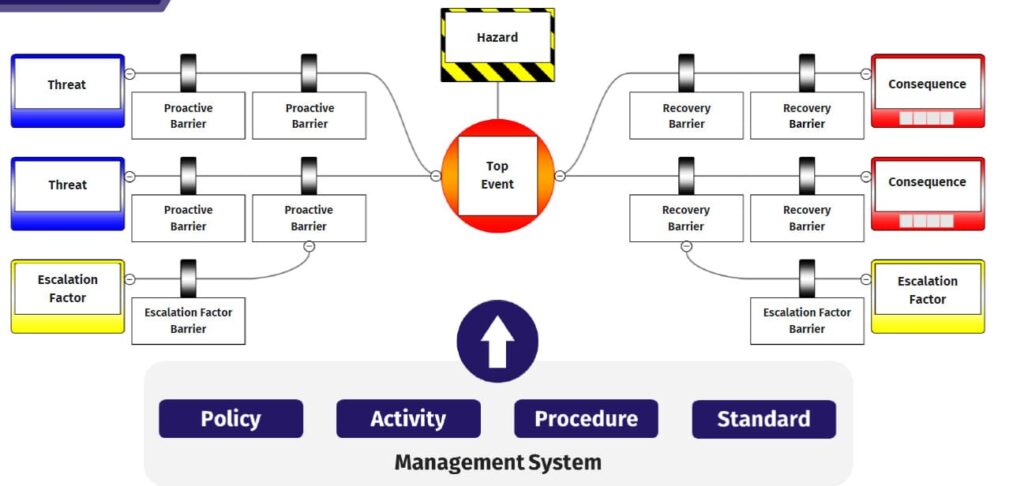
Our team brings expertise in HAZOP facilitation, LOPA, SIL Assessment, BowTie Analysis, and Functional Safety Assessment, providing the technical rigour required to demonstrate ALARP compliance to regulators, auditors, and insurers.
We work across the oil and gas, petrochemical, and power generation sectors in Malaysia and Southeast Asia.
To discuss your ALARP Assessment requirements, contact us today at https://pureintegrity.co/contact-us/
References :
1. IChemE, Guidance on ALARP for Major Hazard Facilities, IChemE Hazards 28 Poster Presentation. Akses: https://www.icheme.org/media/16975/hazards-28-poster-01.pdf
2. Baybutt, P., The ALARP Principle in Process Safety, Process Safety Progress (Wiley/AIChE), 33: 36-40, 24-Apr-2013. Akses: https://aiche.onlinelibrary.wiley.com/doi/abs/10.1002/prs.11599
3. Langdalen, H., Abrahamsen, E.B., & Selvik, J.T., On the Importance of Systems Thinking When Using the ALARP Principle for Risk Management, Reliability Engineering and System Safety (Elsevier), Vol. 204, 2020. Akses: https://www.sciencedirect.com/science/article/abs/pii/S0951832020305482
—
Published by Pure Integrity Sdn. Bhd. – Leading Safety & Integrity Engineering Consultant In Malaysia
Image source:
https://www.primatech.com/technical/alarp-principle
https://theenterpriseworld.com/high-risk-work-environment/
https://www.thechemicalengineer.com/features/making-sure-risks-are-alarp/