In a well-designed control room, an alarm is a signal that demands action. In a poorly managed one, it becomes noise and noise gets ignored.
Alarm Management is the discipline that ensures every alarm in a process facility has a purpose, a priority, and a response.
When it is done well, operators receive timely, relevant warnings that allow them to intervene effectively. Yet, when it fails, operators are overwhelmed by floods of competing alerts, critical signals are missed, and the consequences can be catastrophic.

The Cost of Poor Alarm Management
The scale of the problem is well documented. During the investigation of the 1997 Milford Haven refinery explosion in the UK, the Health and Safety Executive found that among the root causes was an alarm flood of 275 alarms in just 11 minutes; a rate no operator could meaningfully process. The explosion that followed caused injuries and significant damage, and remains a defining case study in why alarm management matters.
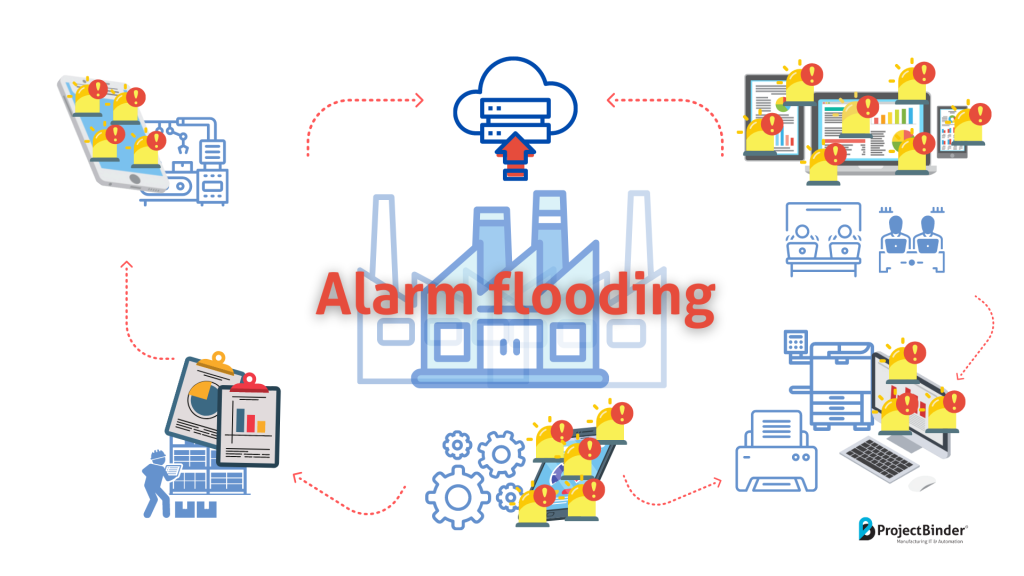
Alarm Flooding
The condition where the rate of incoming alarms exceeds an operator’s capacity to respond – is not an isolated phenomenon. It is endemic across process industries where alarm systems have grown organically over decades, without systematic rationalisation.
The result is control rooms where standing alarms become background noise, where nuisance alarms desensitise operators to genuine threats, and where the alarm system is designed to support human decision-making, actively undermines it.
The consequences extend beyond safety incidents. Poor alarm management contributes to operator fatigue, increased mental workload during abnormal situations, unplanned process shutdowns, and elevated operational risk. For facilities operating under regulatory scrutiny, it also creates compliance exposure.
What Good Alarm Management Requires
Effective alarm management is not simply a matter of reducing the number of alarms. It requires a structured, lifecycle-based approach that covers design, rationalisation, monitoring, and continuous improvement.
The globally recognised framework for this is EEMUA 191 – Alarm Systems: A Guide to Design, Management and Procurement – which has been the industry benchmark since 1999 and was most recently updated in its 4th Edition in 2024.
Alongside EEMUA 191, the international standard IEC 62682 / ISA 18.2 provides a lifecycle-based approach to managing alarm systems from initial design through to ongoing operations.

Together, these frameworks establish that every alarm must satisfy three fundamental criteria: it must require a timely operator response; there must be a consequence if the operator does not respond; and the operator must be able to respond effectively within the available time window.
Key elements of a structured alarm management programme include:
1. Alarm philosophy.
A documented set of principles that defines what constitutes an alarm, how alarms are designed and prioritised and the performance targets the system must meet.
2. Alarm rationalisation.
A systematic review of every alarm in the system to verify that it meets the definition of an alarm, is correctly prioritised, and has a defined operator response.
3. Performance monitoring.
Ongoing measurement of alarm system KPIs, including alarms per operator per hour, standing alarms, and chattering alarms, tracked against EEMUA 191 benchmarks.
4. Management of change.
Ensuring that modifications to the process or control system do not inadvertently introduce new nuisance alarms or degrade existing alarm performance.
Alarm Management and Process Safety
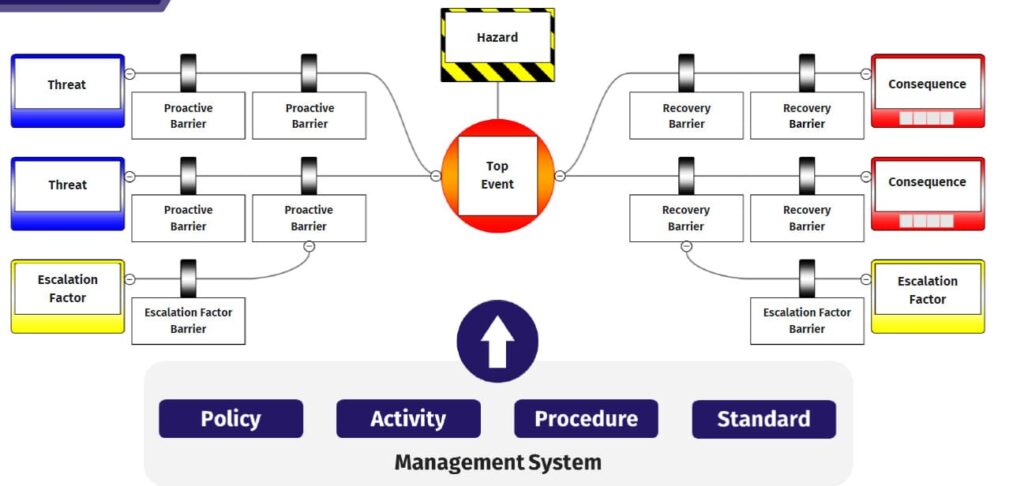
Alarm management sits within the broader Process Safety Management (PSM) framework as a critical human factors discipline. An alarm system is a safeguard and like all safeguards within a BowTie Analysis or LOPA study, its reliability must be assessed and maintained.
Where alarms are credited as a risk reduction measure in the determination of the Safety Integrity Level (SIL) for a Safety Instrumented Function (SIF), a direct relationship is established between alarm management and the functional safety lifecycle. As such, both disciplines should be managed within an integrated risk and reliability management programme to ensure ongoing effectiveness and compliance.
The Human Factors in Alarm Management
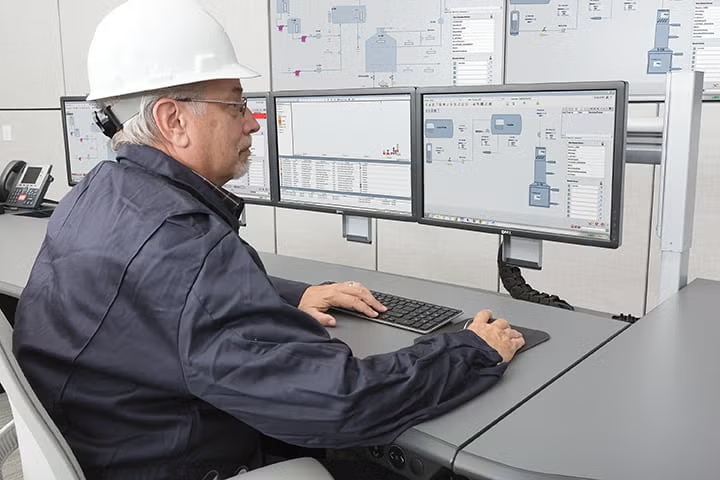
Alarm management is ultimately a human factors challenge. The most sophisticated alarm system in the world fails if the operator sitting in front of it cannot distinguish between a critical warning and a nuisance alert.
The lesson is consistent with what the data show: alarm management is not a one-off project. It is a continuing operational discipline.
How Pure Integrity Can Help
At Pure Integrity Sdn. Bhd., we provide Alarm Rationalisation services as part of a comprehensive process safety offering.
Our consultants conduct structured alarm reviews aligned with EEMUA 191 and ISA 18.2, identifying nuisance alarms, reviewing alarm priorities, and developing actionable recommendations to bring alarm system performance within industry benchmarks.
Our services also include technical services, HAZOP studies, HAZID workshops LOPA, SIL Assessment, Functional Safety Assessment and BowTie Analysis; delivering integrated process safety support across the oil and gas, petrochemical, and power generation sectors in Malaysia and Southeast Asia.
To discuss your alarm management needs, contact us at https://pureintegrity.co/contact-us/
References :
1. IChemE Safety Centre, Lead Process Safety Metrics: Alarm Rationalisation, IChemE Safety Centre Guidance Document. Akses: https://www.icheme.org/media/17392/lc-0151_21-lead-process-safety-metrics-alarm-rationalisation-final.pdf
2. EEMUA, Good Practice for All Aspects of Industrial Alarm Systems – New Edition of EEMUA 191 Released, 03-Dis-2024. Akses: https://www.eemua.org/news/good-practice-for-all-aspects-of-industrial-alarm-systems-new-edition-of-eemua-191-released
3. Mustafa et al., A Review on Effective Alarm Management Systems for Industrial Process Control: Barriers and Opportunities, ScienceDirect (Elsevier), 08-Mac-2023. Akses: https://www.sciencedirect.com/science/article/abs/pii/S1874548223000124
—
Published by Pure Integrity Sdn. Bhd. – Leading Safety & Integrity Engineering Consultant In Malaysia
Image sources
https://www.chemengonline.com/alarm-management-numbers/
https://projectbinder.eu/alarm-management-within-manufacturing/
https://www.safetysolutions.com.au/consulting/engineering-services/alarm-management/
https://www.instmc.org/events/419/central_northwest_local_section_process_alarm_systems_eemua_191_edition_4_updates/