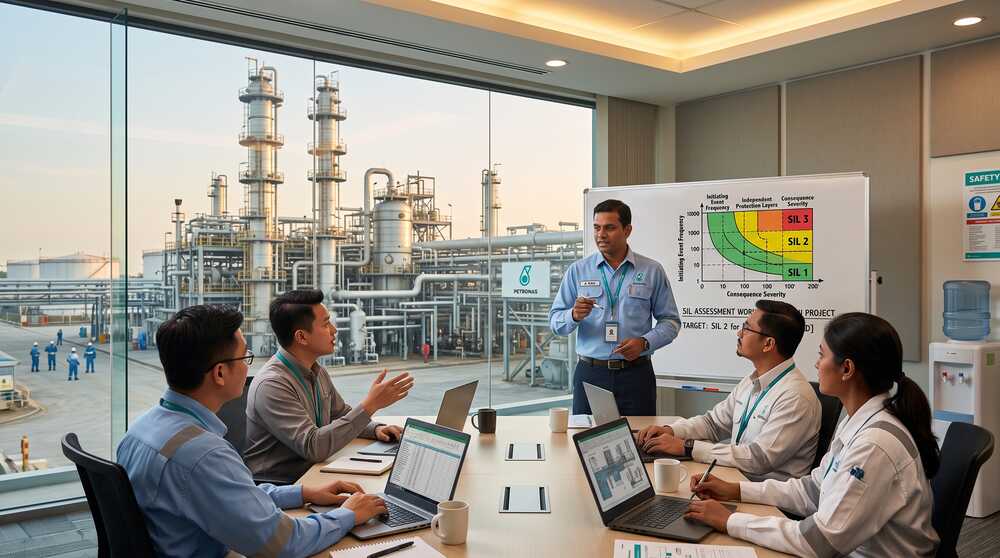

Designing a Safety Instrumented System to meet IEC 61511 is one thing. Proving that it does is another. In functional safety practice, the distinction between design intent and demonstrated compliance is the space where validation, verification, and audit operate – and where the real rigour of a safety programme is tested.
For engineers and operators working in the process industry, these three activities are not optional supplements to the functional safety lifecycle. They are requirements under IEC 61511, and their absence is both a regulatory exposure and a safety risk.
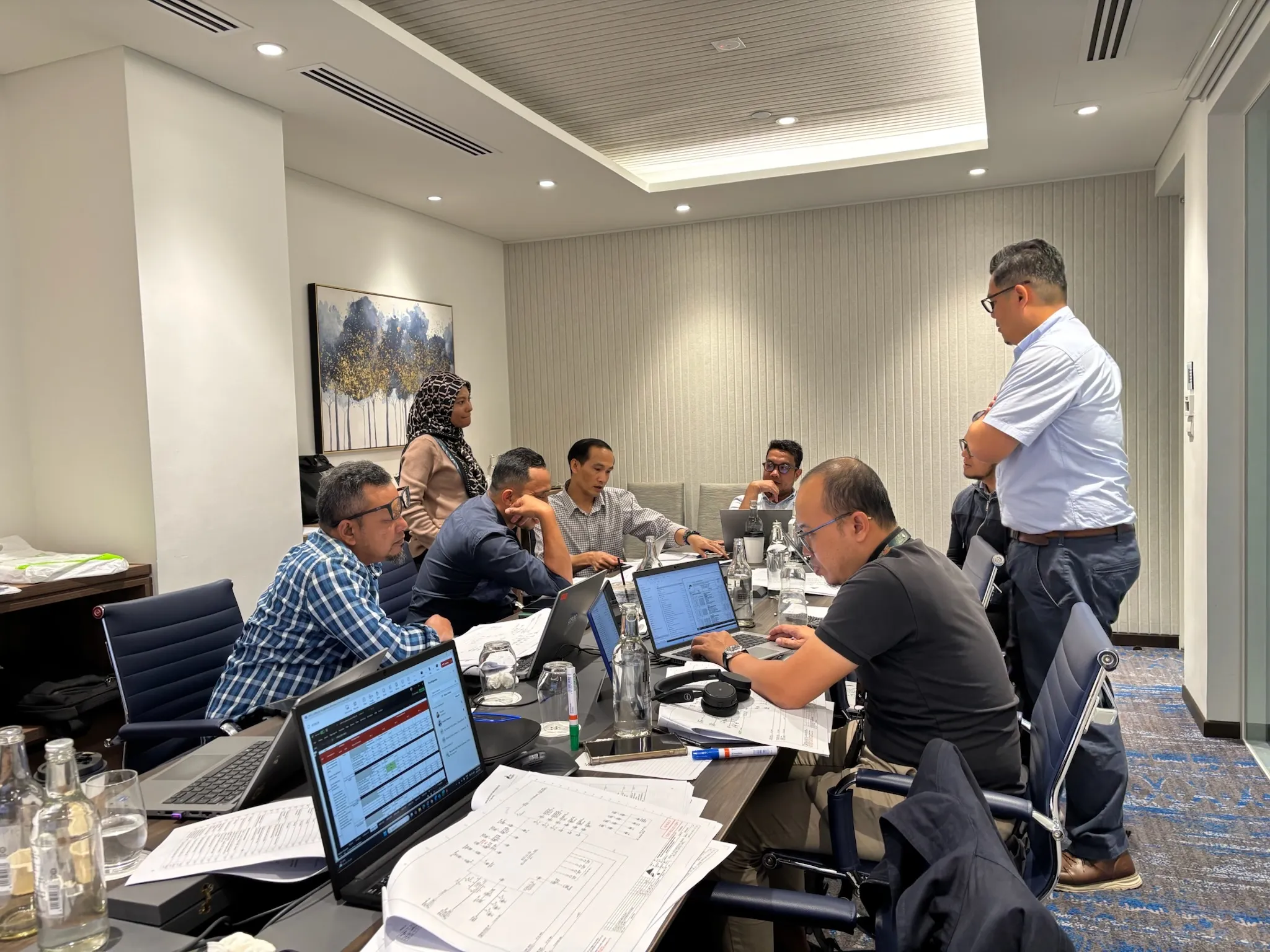
Verification vs Validation: A Critical Distinction
The terms verification and validation are frequently used interchangeably, but in the context of IEC 61511, they have precise and distinct meanings.
Verification confirms that the outputs of each lifecycle phase meet the requirements set out in the previous phase. Verification is carried out at each stage of the SIS lifecycle – confirming that the detailed design meets the Safety Requirement Specification, that the software implementation meets the software design, and that the installed system meets the design documentation. Verification is largely a documentation and calculation activity.
Validation asks: have we built the right system? It confirms that the completed SIS will perform its required Safety Instrumented Functions under all required conditions. Validation occurs at the end of the Realisation phase – typically through a combination of Factory Acceptance Testing (FAT), Site Acceptance Testing (SAT), and functional testing at commissioning. Validation requires physical demonstration, not just documentation review.
Both are mandatory under IEC 61511. Facilities that have commissioned SIS without formal validation cannot demonstrate that their safety systems will perform as intended on demand.
What Functional Safety Validation Requires
Safety validation under IEC 61511 is a structured process that must be planned from the outset of the SIS lifecycle – not left as an afterthought at commissioning.
The validation plan defines what will be tested, how it will be tested, what acceptance criteria must be met, and who is responsible for conducting and witnessing the tests. Each Safety Instrumented Function must be tested in its entirety – from the initiating sensor, through the logic solver, to the final element – under conditions that are representative of the actual demand scenario.
Common validation activities include functional testing of all SIFs against the Safety Requirement Specification, proof testing of voting configurations, confirmation of response times, and verification of safe state achievement. Where full end-to-end testing is not feasible under live plant conditions, partial stroke testing and simulation-based approaches must be rigorously documented and justified.
Validation also covers the human factors dimension: are the operator interfaces, alarm configurations, and bypass management procedures in place and fit for purpose? Effective Alarm Management is a prerequisite for safe SIS operation.
Functional Safety Assessment

A Functional Safety Assessment (FSA) is the independent evaluation of the SIS against the requirements of IEC 61511, carried out at defined stages of the lifecycle. IEC 61511 defines five stages at which an FSA should be considered, including after hazard and risk assessment, after SIS design, and after installation and commissioning.
The FSA is conducted by a competent, independent assessor with the authority to identify non-conformances and require corrective action. The assessment covers the completeness and adequacy of the Safety Requirement Specification, the correctness of the SIL determination and verification calculations, the adequacy of the design against IEC 61511 requirements, and the completeness of the validation evidence.
For facilities subject to regulatory oversight – including those operating under Malaysia’s DOSH Major Hazard regulations – a documented FSA provides essential assurance that the functional safety lifecycle has been followed. This connects directly to the ALARP Assessment obligation: an SIS that has not been formally validated cannot be credited as a demonstrated ALARP control.
The Human Element in Validation and Audit
Validation and audit are most effective when conducted by engineers who understand both the standard and the operational context – who know what a well-designed SIS looks like in practice, and what failure modes to look for in the documentation and the field.
Dr Khairil Osman, TUV FSE, Director and Principal Consultant at Pure Integrity, brings that combination. His TUV Rheinland Functional Safety Engineering certification and his direct experience managing instrument systems for over 16 years give him the technical authority and practical insight to conduct validation and FSA work that is both rigorous and credible.
How Pure Integrity Can Help
At Pure Integrity Sdn. Bhd., we conduct Functional Safety Assessments, safety validation support, and SIL verification reviews aligned with IEC 61511. Our assessments are conducted by TUV-certified functional safety engineers with direct experience in process industry SIS design, commissioning, and operations.
Our Functional Safety services are fully integrated with our Process Safety Management, HAZOP facilitation, LOPA, and SIL determination work – providing end-to-end functional safety lifecycle support across Malaysia and Southeast Asia.
To discuss your Functional Safety validation requirements, contact us at https://pureintegrity.co/contact-us/
References :
1. Gruhn P, IEC 61511 – Functional Safety in the Process Industry: The Prominence of Validation and Verification, CSIRO Publishing, 2015. Akses: https://www.publish.csiro.au/aj/aj14031
2. ScienceDirect (Elsevier), Functional Safety Concept for Hazardous Systems and New Challenges, Process Safety and Environmental Protection. Akses: https://www.sciencedirect.com/science/article/abs/pii/S0950423005000707
3. IChemE, Functional Safety Assessment Guidance – Safety Instrumented Systems. Akses: https://www.icheme.org/knowledge/process-safety/
—
Published by Pure Integrity Sdn. Bhd. – Process Safety and Functional Safety Consultants, Malaysia.
Image source: https://www.grcpartnersasia.com/wp-content/uploads/5-Types-of-Risk-Assessments-and-How-to-Use-Them.jpg