


BowTie Analysis Services

Visualise major accident risks, critical barriers & control effectiveness clearly.

10-Year Active Term Contract with Shell (Sabah/Sarawak) | CIDB G4.

lloyds register logo
petronas logo
tuv rheinland logo
shell logo
tenaga malaysia berhad logo

The PISB Approach

Your team works safer and more efficiently with manuals they can actually understand.

Identify

Analyze

Evaluate

Recommend
Verify

BowTie Analysis For Clearer
Major Accident Risk Management

BowTie Analysis is a structured risk assessment method used to visualise how hazardous events can occur, what consequences may follow, and which barriers are in place to prevent or mitigate them.

Pure Integrity supports organisations in developing practical BowTie Analysis studies that connect hazards, threats, consequences, preventive controls, and recovery measures into one clear visual model.

This helps asset owners, operators, and safety teams improve risk understanding, strengthen barrier management, and support better process safety decision-making.

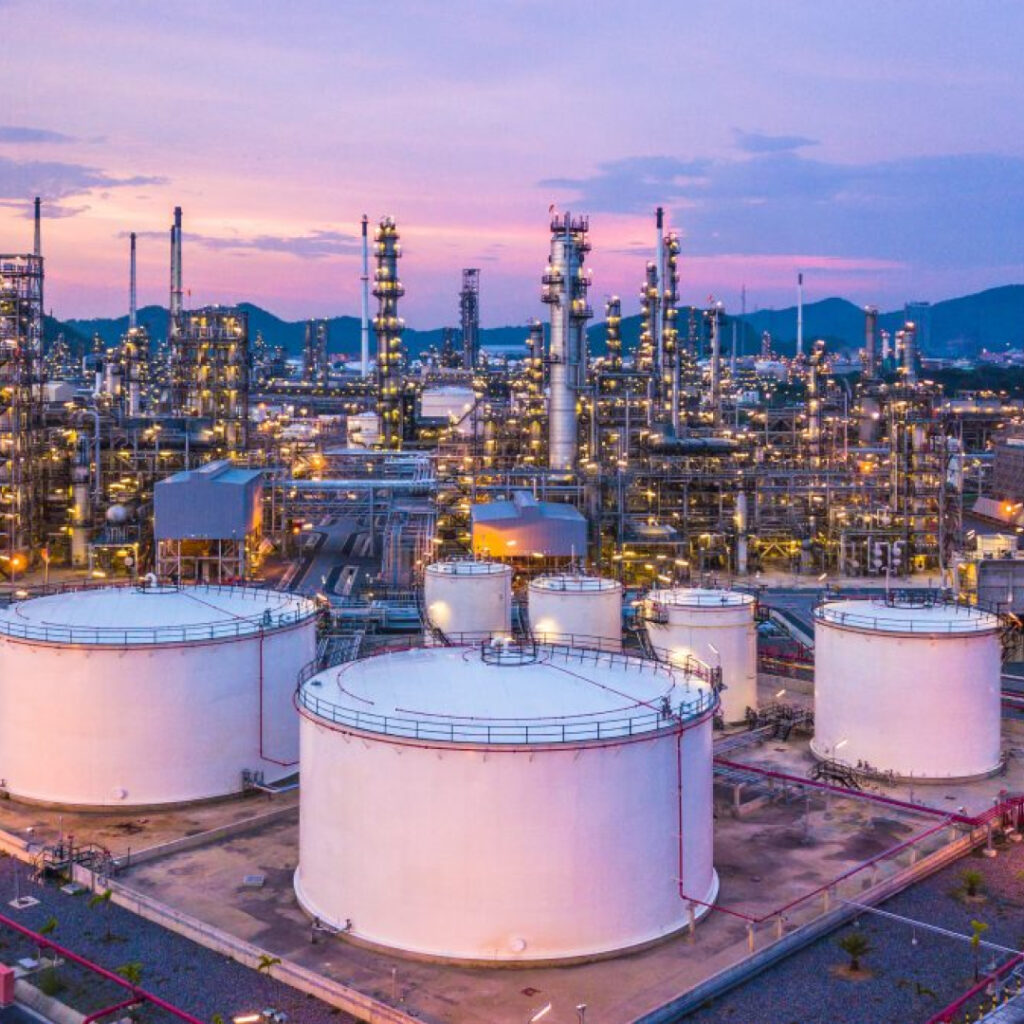
asset life study optimization
bowtie analysis

The Process

How We Visualise Hazards, Threats, Consequences & Barriers

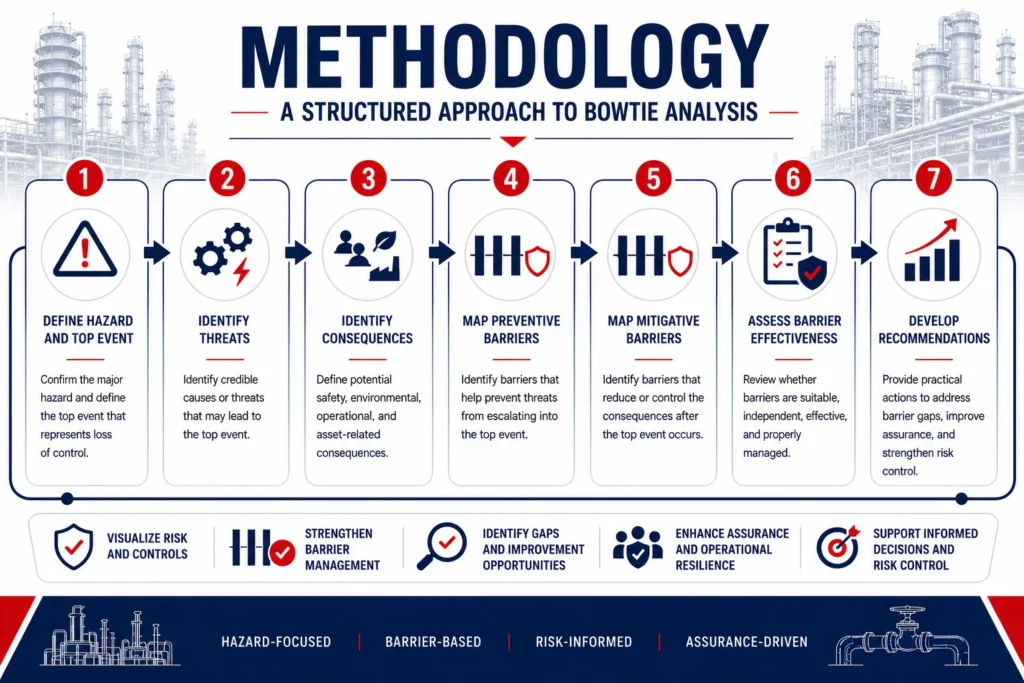
Pure Integrity begins by defining the major hazard, top event, threats, and potential consequences based on available process safety studies, operating experience, and stakeholder input.

We then identify preventive and mitigative barriers, assess barrier effectiveness, highlight gaps or weaknesses, and develop practical recommendations to strengthen major accident hazard control.

Problem We Solve

Unclear Major Accident Risk Picture

We help teams visualise how hazards can escalate into major incidents and what controls are in place.

Weak Barrier Visibility

We identify preventive and mitigative barriers so teams can clearly understand what protects the facility.

Gaps Between Risk Studies And Operations

We help translate technical risk studies into a practical visual format that operations and management teams can use.

Difficulty Communicating Process Safety Risk

We make complex hazard scenarios easier to explain across engineering, operations, maintenance, HSE & leadership teams.

Benefits

BowTie Analysis helps organisations communicate major accident risks clearly and strengthen barrier management.

Supports safe operation of aging assets

Improves visibility of hazards, threats & consequences

Clarifies preventive & mitigative barriers

Supports major accident hazard management

Strengthens barrier ownership & assurance

Improves risk communication across teams

Helps identify gaps in existing controls

Why Us?

Pure Integrity provides structured & practical BowTie Analysis consulting for hazardous operations, safety-critical facilities & asset-intensive industries.

Structured Process Safety Approach

We develop BowTie studies using clear methodology, engineering logic, and practical workshop facilitation.

We help clients identify, evaluate, and strengthen the barriers that prevent or mitigate major accident events.

Our BowTie outputs help technical and non-technical teams understand risk more clearly.

We can develop BowTie analysis based on existing hazard studies, process risk assessments, and major accident hazard registers.

process safety engineering pure integrity
bowtie analysis methodology

Deliverables​

BowTie Analysis report

Hazard and top event definition

Threat and consequence mapping

Preventive and mitigative barrier register

Barrier effectiveness review

Gap analysis and improvement recommendations

Action tracking log

BowTie diagrams or visual risk models

FAQ

  • What is BowTie Analysis?

    BowTie Analysis is a visual risk assessment method used to show the relationship between hazards, threats, top events, consequences & barriers.

  • Why is BowTie Analysis important?

    It helps organisations understand major accident risk clearly, identify critical barriers, and improve communication between technical and operational teams.

  • What is a top event in BowTie Analysis?

    A top event is the point where control over a hazard is lost. It sits at the centre of the BowTie diagram.

  • When should BowTie Analysis be conducted?

    BowTie Analysis is useful after HAZID, HAZOP, PHA, or major accident hazard studies, especially when organisations need clearer barrier visibility and risk communication.

  • What are preventive and mitigative barriers?

    Preventive barriers reduce the likelihood of the top event occurring. Mitigative barriers reduce the impact after the top event happens.

  • Who should participate in a BowTie workshop?

    Typical participants include process safety, operations, maintenance, engineering, HSE, inspection, reliability & asset integrity representatives.

Who We Work With

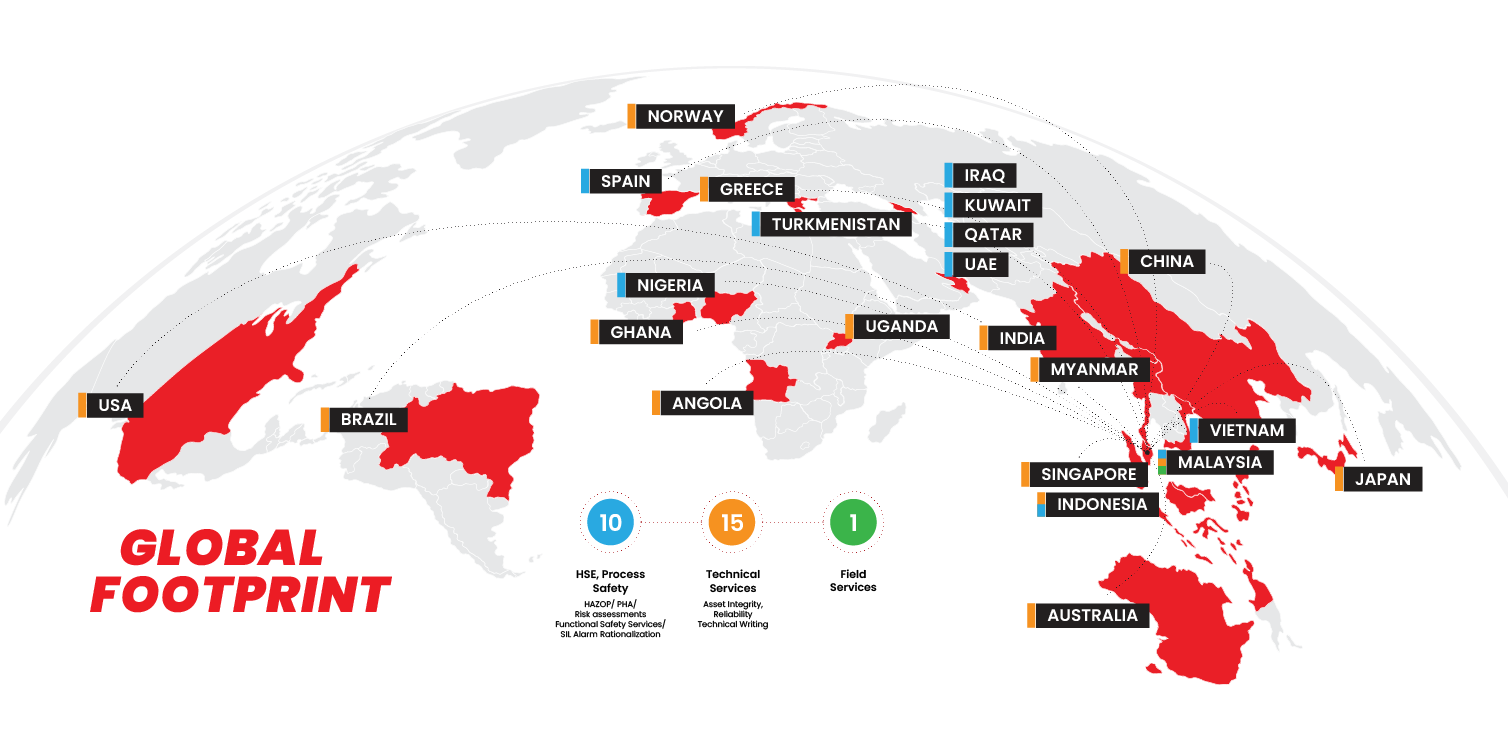
We have worked closely with many local and multi-national companies in Malaysia as well as overseas to fulfill their specific needs. Through close collaboration we have helped clients deliver safer, more reliable, and cost effective operations.

Strengthen Major Accident Barrier Management

Work with Pure Integrity to visualise hazards, identify barrier gaps & improve process safety risk control.

TUV Rheinland Partner | CIDB G4 Registered | HRD Corp Accredited
Contact us

(06) 603 0631 | (06) 630 7807

suzlinda@pureintegrity.my

Pure Integrity Sdn. Bhd. (1105358-T)
No. 139, Jalan S2 B6,
Seremban 2, 70300 Seremban,
Negeri Sembilan, Malaysia

Contact us

(06) 603 0631 | (06) 630 7807

suzlinda@pureintegrity.my

Pure Integrity Sdn. Bhd. (1105358-T)
No. 139, Jalan S2 B6,
Seremban 2, 70300 Seremban,
Negeri Sembilan, Malaysia

Pure Integrity Sdn Bhd. Copyright © 2026. All rights reserved.
Scroll to Top