


10-Year Active Term Contract with Shell (Sabah/Sarawak) | CIDB G4.
Your team works safer and more efficiently with manuals they can actually understand.


A Safety Requirements Specification defines what a safety function must do the realisation phase proves the system actually does it. This is where design, hardware, software, and testing come together to deliver the integrity that hazard & SIL studies demanded.
At Pure Integrity, we provide SIL verification, design & software assurance & structured FAT, SAT, and validation in accordance with IEC 61511, confirming each safety function meets its target before it is relied upon in operation.
We begin with SIL verification, assessing reliability (PFDavg / RRF), architectural constraints, and hardware fault tolerance against each SIF’s target, then review the SIS design and application software against the SRS and relevant standards.
As the system is built, we plan and support FAT & SAT, followed by validation and Functional Safety Assessment to confirm the complete system performs as specified before startup.
We verify each function actually achieves its target SIL.
We confirm assumptions from the SRS hold true in the design.
We assess application software against the SRS and IEC 61511.
We plan structured testing so faults are caught before reliance.
We check the installed system matches what was specified.
We validate the process reaches a safe state within the required time.
Verification and validation turn specification into proven, dependable risk reduction.
Verification and validation carried out by certified Functional Safety professionals.
PFDavg / RRF, architectural constraints, and hardware fault tolerance against target.
Hardware and application software reviewed against the SRS and IEC 61511 / 61508.
Structured FSA at the relevant lifecycle stages for an objective fitness check.
Verification connects cleanly to the SRS before it and operation after it.
It confirms whether a designed safety function achieves its target SIL — assessing reliability, architectural constraints, and hardware fault tolerance.
Determination sets the target integrity; verification confirms the design meets it.
FAT verifies the system at the supplier's facility; SAT confirms correct installation and performance on site.
We identify the shortfall and recommend practical options, design changes, added redundancy, or revised proof test intervals to close the gap.
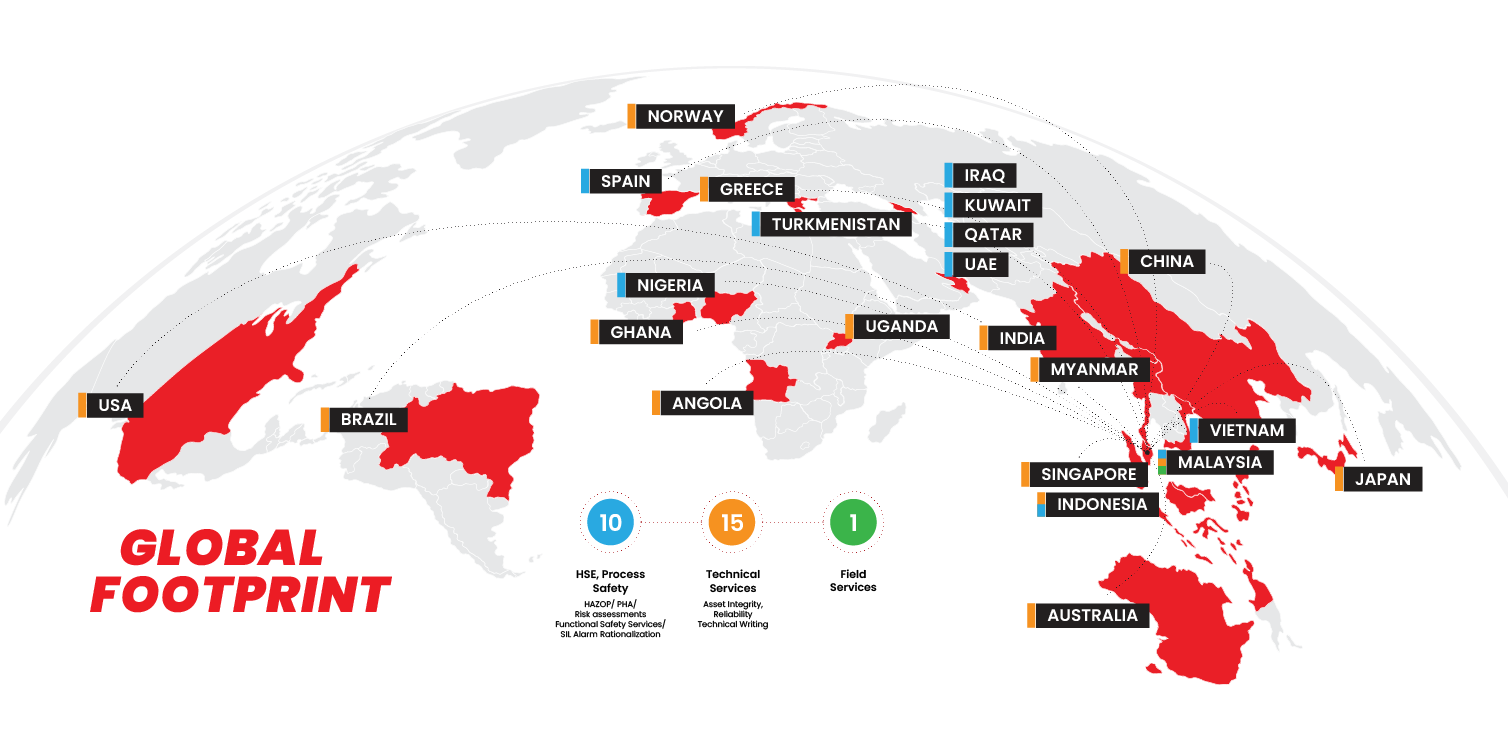
We have worked closely with many local and multi-national companies in Malaysia as well as overseas to fulfill their specific needs. Through close collaboration we have helped clients deliver safer, more reliable, and cost effective operations.
Work with Pure Integrity to verify, test & validate Safety Instrumented Systems for dependable, demonstrable risk reduction.
TUV Rheinland Partner | CIDB G4 Registered | HRD Corp Accredited
Quick Links
Industries
Quick Links
services
Industries