
In high-hazard B2B industries, spanning offshore oil production, gas refineries, petrochemical synthesis, and high-voltage power generation, the margin between profitable operation and catastrophic failure is measured in milliseconds.
Traditional passive safety barriers, such as mechanical pressure relief valves and containment dikes, are no longer sufficient to manage the complex, high-pressure profiles of modern chemical processing facilities.
Today, plant integrity relies heavily on Safety Instrumented Systems (SIS), engineered control layers designed to detect abnormal process excursions and automatically execute fail-safe trip sequences before a major hazard event occurs.
However, across Malaysia’s industrial sector, a critical vulnerability persists: treating functional safety as a static design requirement rather than a continuous operational lifecycle governed by international standards such as IEC 61508 and IEC 61511.
[Process Excursion Detected by Sensor]
                 │
                 ▼
     [Logic Solver Evaluates Risk]
                 │
                 ▼
[Final Control Element Actuated (Valve Trip)] ──► (Target: Must Meet Required SIL)
Decoding the Anatomy of Functional Safety: SIS, SIL, and LOPA
To prevent major accidents that stop production and trigger regulatory prosecution, engineering teams must speak a unified technical language across design, commissioning, and maintenance:
Safety Instrumented Systems (SIS)
An SIS is an independent engineered system composed of three core hardware assemblies: sensors (pressure, temperature, or flow transmitters), a logic solver (safety programmable logic controller or PLC), and final control elements (shutdown valves or circuit breakers).
Unlike basic Process Control Systems (BPCS), an SIS sits dormant, waking instantly to isolate processes when operating parameters cross critical thresholds.
Safety Integrity Level (SIL)
SIL represents the statistical level of risk reduction an engineered safety loop must provide, categorized from SIL 1 (10- to 100-fold risk reduction) to SIL 4 (10,000- to 100,000-fold risk reduction).
A common engineering pitfall is over-specifying SIL targets during design, leading to exorbitant capital expenditure and complex testing requirements, or under-specifying SIL levels, leaving the plant exposed to catastrophic blowout or fire hazards.
Layers of Protection Analysis (LOPA)
LOPA is the semi-quantitative analytical tool used to assess frequency and severity of potential hazard scenarios.
By mapping initiating events against existing independent protection layers (such as operator intervention, alarms, and mechanical relief), engineers calculate the precise residual risk gap, determining exact SIL requirements without guesswork.
The Operational Blind Spot: Where Functional Safety Fails in the Field
A compliant SIS design on paper is useless if it degrades during plant operations. Why do functionally rated safety loops fail when called upon?
| Failure Mode | Root Cause in Plant Operations | Risk Impact |
| Proof Testing Omissions | Skipping scheduled functional testing of trip valves due to production demands. | Latent failures remain hidden until an actual emergency trip occurs. |
| Bypassing Safety Loops | Temporarily forcing inputs or jumping interlocks during maintenance without formal MOC. | Strips the facility of its automated protection layer entirely. |
| Component Replacement Errors | Replacing a transmitter or valve actuator with a non-SIL certified “equivalent” model. | Voids the safety verification calculations and degrades loop reliability. |
Operational Excellence via Pure Integrity Academy’s Functional Safety Programme
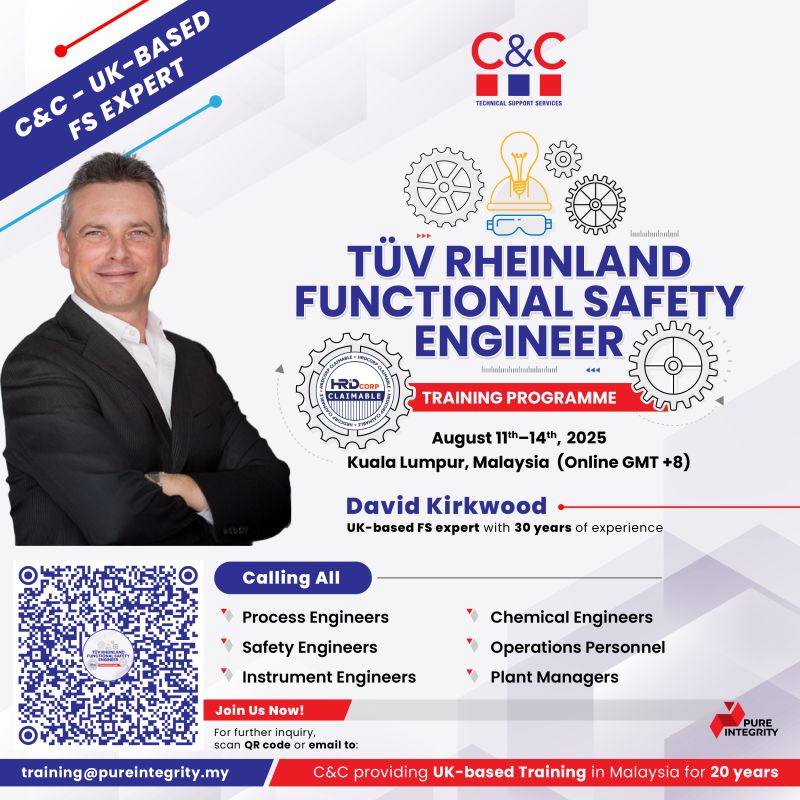
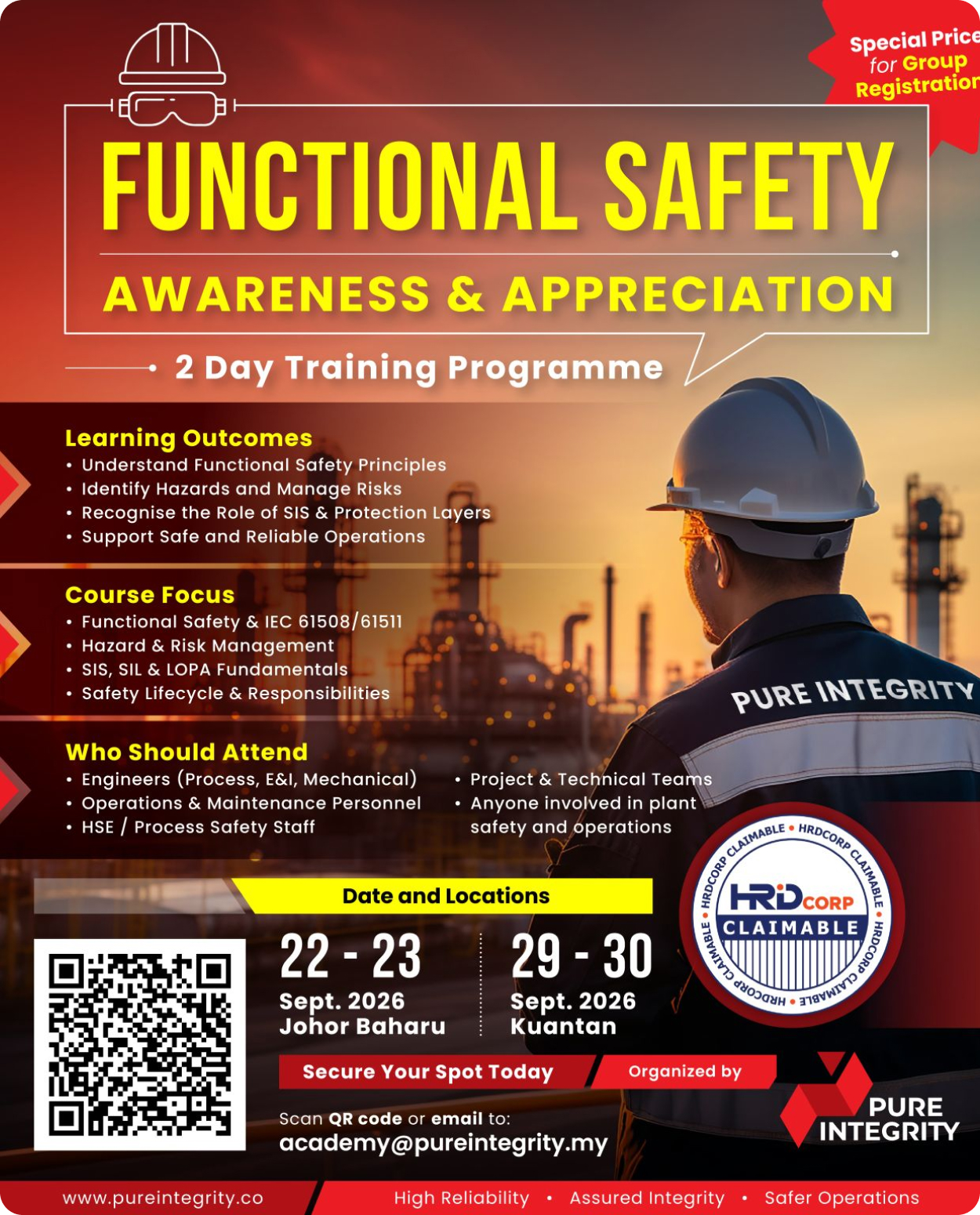
To eliminate operational blind spots and build internal engineering resilience, Pure Integrity Academy introduces its premier Functional Safety Awareness & Appreciation Training Programme.
Designed to bridge the historical divide between design engineers and run-and-maintain teams, this intensive 2-day curriculum demystifies complex safety standards and translates them into actionable plant practices.
The program is guided by Pure Integrity’s technical leadership, including TUV-certified Functional Safety Engineers who have successfully led Hazard and Operability Studies (HAZOP), LOPA, and SIL verification projects across Southeast Asia, East Asia, West Africa, and the UK Continental Shelf.
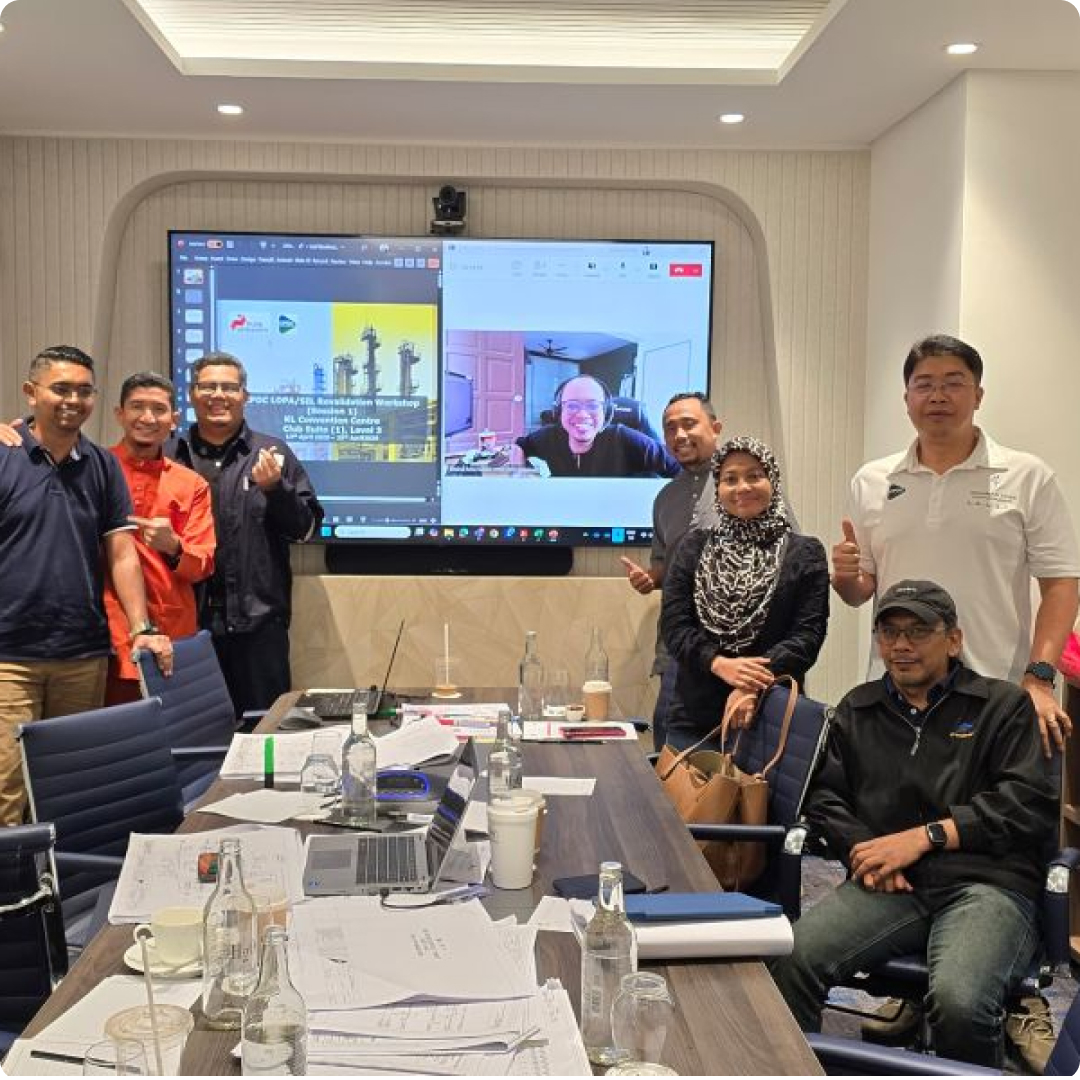
Our Service : Functional Safety : Accurate SIL & SRS Design Solutions
What Your Engineering Team Will Master:
-
The Full IEC 61511 Safety Lifecycle: Understand how safety loops move from initial hazard identification (HAZID/HAZOP) through SIS design, verification, commissioning, and long-term maintenance.
-
Practical LOPA Execution: Learn to evaluate initiating causes, quantify independent protection layers, and avoid expensive over-engineering while ensuring absolute regulatory compliance.
-
Run-and-Maintain Competency: Equip instrumentation, electrical, and mechanical technicians with the rationale behind rigorous proof-testing schedules and management of change (MOC) disciplines.
-
Tailored B2B Utility: Whether you are an HSE strategist, an automation engineer, or a plant manager, understanding these systems ensures asset reliability, extends operational life, and protects your workforce.
Upcoming Regional Schedules:
- 22–23 September 2026 | Johor Bahru, Johor
- 29–30 September 2026 | Kuantan, Pahang
- Funding: 100% HRD Corp Claimable
Upgrade your facility’s process safety engineering capability by registering your team today at: academy@pureintegrity.my
Published in July 2026
Source : LinkedIn