


ALARP Assessment Services
Demonstrate that process safety risks are reduced to a tolerable level.
10-Year Active Term Contract with Shell (Sabah/Sarawak) | CIDB G4.
The PISB Approach
Your team works safer and more efficiently with manuals they can actually understand.

Identify

Analyze

Evaluate

Recommend
Verify
ALARP Assessment For Defensible Risk
Reduction Decisions
An ALARP Assessment helps organisations demonstrate that risks have been reduced As Low As Reasonably Practicable.
Pure Integrity supports clients in evaluating process safety risks, reviewing existing safeguards, and identifying whether additional risk reduction measures are required. Our approach helps asset owners make clearer, more defensible decisions where safety, cost, practicality, and operational impact must be balanced.
This is especially important for hazardous operations where major accident risks, regulatory expectations, and management assurance need to be clearly documented.
The Process
How We Assess Risk
Reduction & Practicality
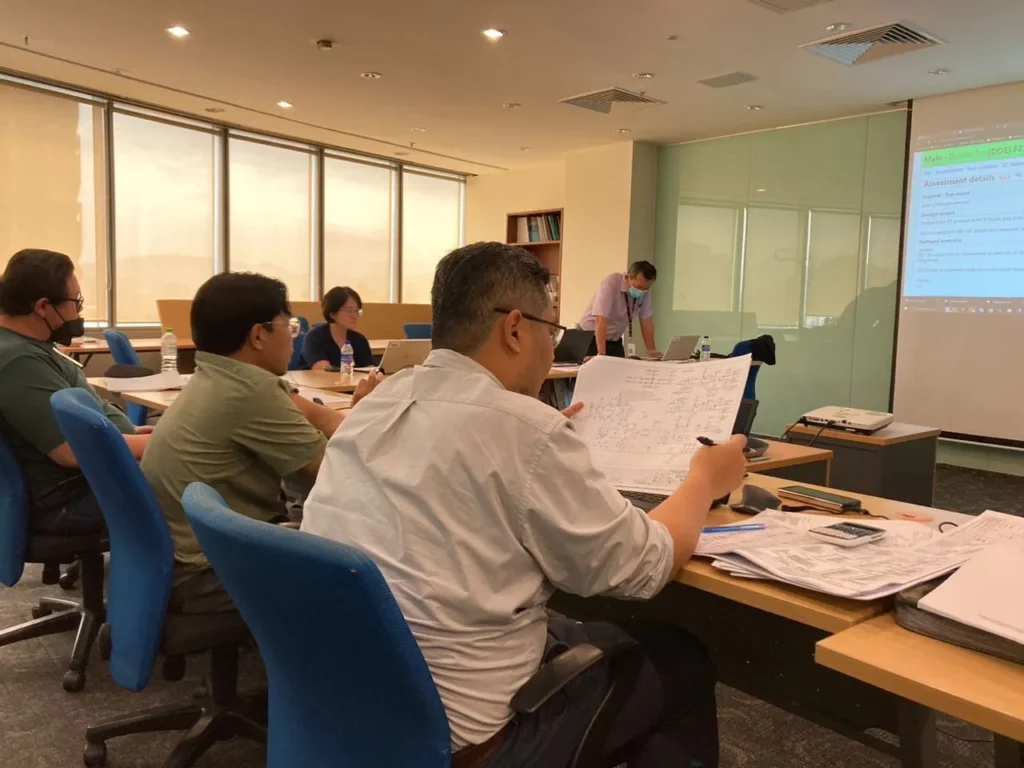
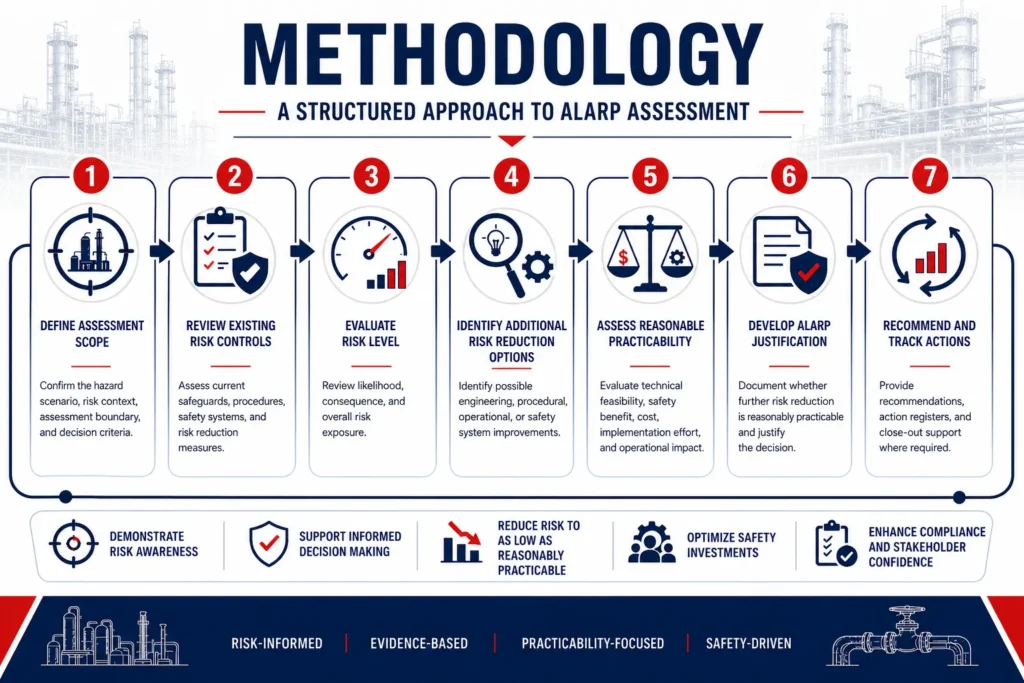
Pure Integrity begins by reviewing the identified hazard scenario, existing safeguards, risk level, and available risk reduction options.
We then assess whether further controls are reasonably practicable by considering safety benefit, technical feasibility, implementation effort, cost, and operational impact. From there, we document the ALARP justification and provide clear recommendations to support decision-making, assurance, and action close-out.
Problem We Solve
Uncertainty Around Additional Controls
We assess whether further risk reduction measures are reasonably practicable.
Gaps Between Risk Assessment And Decision-Making
We help translate risk findings into clear, practical actions and justifications.
Compliance And Assurance Pressure
We support organisations that need stronger evidence for regulatory, audit, or internal assurance purposes.
Balancing Safety, Cost & Practicality
We help evaluate risk reduction options in a way that is technically sound & operationally realistic.
Benefits
ALARP Assessment helps organisations justify risk reduction decisions & strengthen process safety assurance.
Demonstrates that risks are reduced to a tolerable level
Supports regulatory, audit & management assurance
Improves clarity in risk reduction decision-making
Helps identify practical additional safeguards
Provides technical justification for accepted risk levels
Strengthens major accident hazard management
Supports transparent and defensible safety decisions
Why Us?
Pure Integrity provides structured, practical, and engineering-led ALARP Assessment support for hazardous operations and safety-critical facilities.
Structured Risk Assessment Approach
We help teams evaluate risks consistently and document the basis for ALARP decisions.
Practical Risk Reduction Focus
Our recommendations are designed to be technically sound, realistic, and implementable.
Process Safety Understanding
We understand major accident hazards, safeguards, protection layers, and operational risk exposure.
Clear ALARP Justification
We develop documentation that supports management review, audit readiness, and regulatory expectations.
Deliverables
ALARP Assessment report
Risk scenario review
Existing safeguard and control review
Risk reduction option assessment
Reasonable practicability justification
Recommended additional controls, where required
Management review or assurance support
Johan Andak is a process safety and operations specialist with decades of experience in the oil and gas, petrochemical, and energy sectors. As Managing Director of Pure Integrity, he provides strategic and technical leadership in process safety, functional safety, and risk assessment, supporting major projects across Southeast Asia, the North Sea, West Africa, Brazil, and Australasia.
Education & Certificate

Bachelor’s Degree in Chemical Engineering
Universiti Teknologi PETRONAS (UTP) Certificate
Certified Functional Safety Engineer
(Safety Instrumented Systems) TÜV Rheinland
FAQ
-
What does ALARP mean?
ALARP means reducing risk to a level where further reduction would be grossly disproportionate to the safety benefit gained.
-
What is an ALARP Assessment?
An ALARP Assessment is a structured process used to demonstrate that risks have been reduced As Low As Reasonably Practicable.
-
When is ALARP Assessment required?
It is commonly required when significant safety risks remain after assessment, when additional controls are being considered, or when management needs clear justification for risk acceptance.
-
What is the outcome of an ALARP Assessment?
The outcome is a clear justification of whether risks are tolerable, whether further controls are required & what actions should be taken.
-
Who should be involved in an ALARP Assessment?
Relevant participants may include process safety, engineering, operations, maintenance, HSE, technical authorities & management representatives.
-
What information is needed for an ALARP Assessment?
Typical inputs include hazard study findings, risk assessment results, existing safeguards, proposed risk reduction options, cost information, operational constraints, and relevant technical data.
Who We Work With
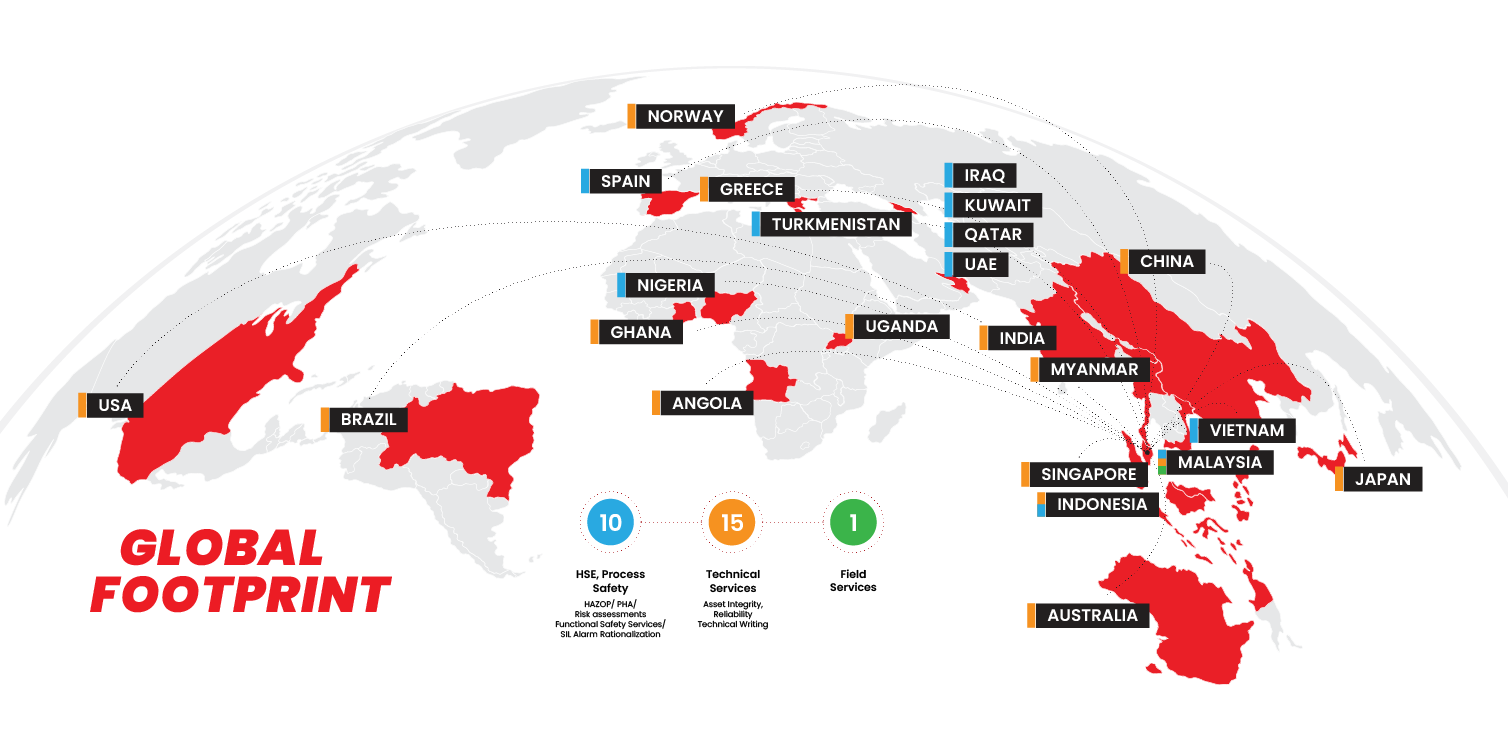
We have worked closely with many local and multi-national companies in Malaysia as well as overseas to fulfill their specific needs. Through close collaboration we have helped clients deliver safer, more reliable, and cost effective operations.


Strengthen Your ALARP Demonstration
Work with Pure Integrity to assess risk reduction options, justify decisions & support safer process safety outcomes.
TUV Rheinland Partner | CIDB G4 Registered | HRD Corp Accredited